
The Dolphins Fall Short But Expansion Clubs Should Be Copying Their Blueprint
The Dolphins are a great example of how to run a new NRL club
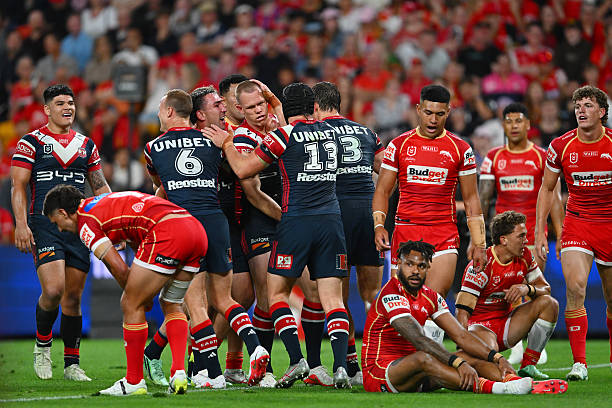
Photo: Getty Images
The Dolphins’ fairytale 2026 season is over.
Sydney Roosters ended their run with a 36-20 victory at Suncorp Stadium on Friday night, denying the Dolphins a place in their first NRL Grand Final.
But what the Dolphins have achieved in just four seasons should still be viewed as one of the most significant expansion stories in the modern NRL.
From entering the competition in 2023 to finishing fourth in 2026, winning their first finals game and reaching a preliminary final, the Dolphins have progressed faster than many expansion clubs manage.
Perhaps more importantly, they have provided a blueprint for how future clubs can build a competitive roster without simply throwing money at established stars.
They didn't try to build a premiership team overnight
The Dolphins' recruitment strategy from the beginning was deliberately measured.
Wayne Bennett and CEO Terry Reader worked alongside recruitment guru Peter O'Sullivan to construct the inaugural roster, with the club specifically resisting the temptation to rush into the market and spend heavily simply because they were a new team.
Instead, they targeted players who could establish the club's culture. Felise Kaufusi and Jesse and Kenny Bromwich were among the experienced Melbourne players brought across, giving the new club a core of players who understood what successful NRL environments looked like.
That was important. An expansion club needs established players, but filling a roster with ageing stars isn't enough. You need experienced players who can help establish standards for the next generation. The Dolphins combined that experience with younger recruitment.
Their biggest success may have been identifying talent before it became expensive
Isaiya Katoa is the clearest example. Katoa was only 18 when the Dolphins gave him his NRL debut in their inaugural 2023 season. Four years later, he is a 22-year-old halfback and captain who has developed into one of the club's most important players.
Jack Bostock followed a similar pathway. He arrived as a development player, having previously represented NSW Under-19s, and eventually forced his way into the NRL squad. In 2026 he made his NSW State of Origin debut.
Tevita Naufahu is another example. He became the first player developed through the Dolphins' academy to graduate into the NRL side and has since secured a contract through 2029.
That's the part future expansion clubs should pay closest attention to. The goal isn't simply to recruit good players. It's to identify them before everyone else does, and develop them into stars.
They also targeted top players on clubs with depth, making them more likely to let players go. Herbie Farnworth became one of the club's major attacking weapons after moving from the Broncos, while Hamiso Tabuai-Fidow developed into one of the most dangerous outside backs in the competition.
The Dolphins have repeatedly looked for players who fit what they were trying to build rather than simply chasing the biggest name available.
Then there is the pathways system
This might ultimately be the most important lesson for Perth and PNG. The Dolphins understood from the beginning that recruitment alone wouldn't sustain them.
You can sign established players to create your foundation, but eventually those players get older, become expensive or leave. So the Dolphins invested heavily in their junior system.
That investment is already beginning to pay off, with the club promoting Lewis Symonds, Zac Garton and Kilarney Lavender into the Top 30 for 2027. Lavender has committed through 2030.
The club has also developed a pathway through its association with the Central Queensland Capras, which helped players such as Kurt Donoghoe get an opportunity to progress into the NRL squad. That creates something every expansion club desperately needs:
depth that doesn't have to be bought on the open market.
This is where the Dolphins can teach Perth and PNG the most
The Perth Bears and PNG's proposed NRL expansion ambitions will face completely different challenges to the Dolphins. But there is one lesson that applies to all of them:
Don't confuse entering the NRL with needing to immediately become an NRL powerhouse.
Build the culture first. Recruit experienced players who can establish standards. Find young talent before it becomes expensive. Create elite pathways. Give those players genuine opportunities. Then retain the ones who develop into stars.
The Dolphins' current roster is evidence of that approach.
Their squad contains established players such as Felise Kaufusi and Jeremy Marshall-King, alongside players who have grown into major contributors such as Katoa, Tabuai-Fidow, Farnworth, Finefeuiaki and Bostock.
It's a mixture of experience, development and targeted recruitment, rather than simply a collection of expensive names.
The next challenge is even harder
The Dolphins have now reached the point where their success creates a new problem. Other clubs know who their best players are.
Katoa, Tabuai-Fidow, Farnworth and Bostock are among the players attracting attention, while the club is already working to secure the next generation behind them.
That's the true test of an expansion club. Getting to the finals once proves you can build a team. Staying there proves you've built a system. The Dolphins haven't completed that second part yet.
But four years into their existence, they have already gone from an unknown expansion side to a preliminary-final team with a developing junior pipeline and a roster containing multiple players who have emerged as representative-level talent.
The Roosters may have ended the Dolphins' 2026 premiership dream. But they haven't ended the bigger story.
If future NRL expansion clubs are looking for a blueprint, they could do far worse than studying how the Dolphins built theirs.
Don't buy a team. Build a club with direction and purpose.
Comments (0)
Sign in to comment, like or dislike.
Loading…