
Rugby League World Cup Team of the Tournament
The 2026 Rugby League World Cup has officially come to an end, these 19 defined this tournament
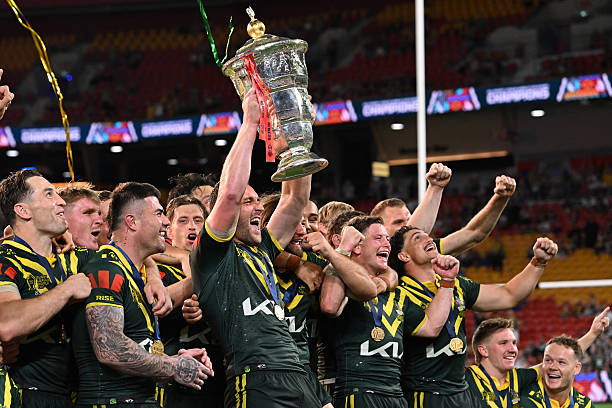
Photo: Getty Images
The 2026 Rugby League World Cup has officially come to an end, with Australia crowned world champions after defeating New Zealand 32–12 in the men's final at Suncorp Stadium.
It was a tournament filled with outstanding individual performances, emerging international stars and some memorable moments across the competition.
Australia ultimately claimed their 13th men's World Cup title, but the best players were spread across several nations, with Samoa, Tonga, Fiji and New Zealand all producing footballers who made a major impression.
This is not simply a team made up of the biggest names or the players who reached the final. It recognises the footballers who delivered across the competition, with individual statistics, consistency and influence all taken into consideration.
Here is the full team.
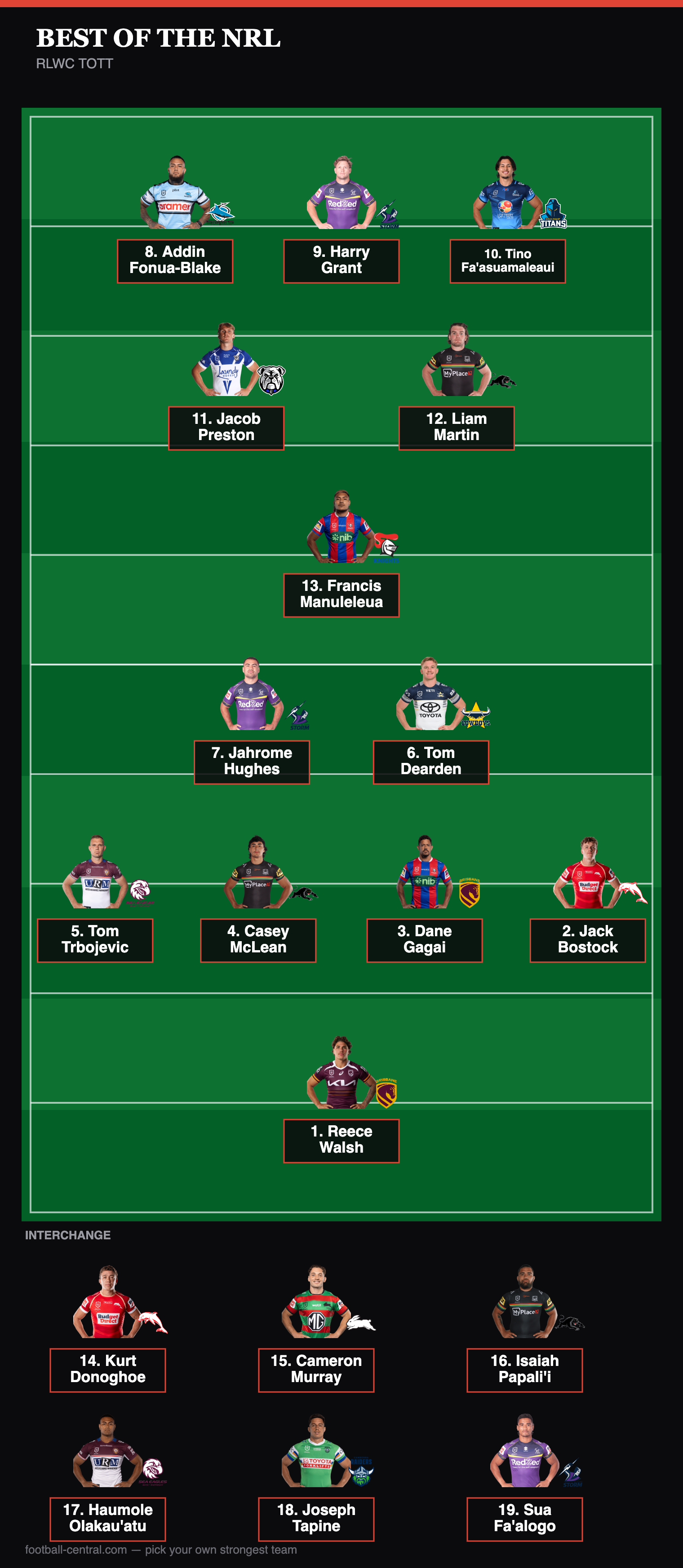
1. Fullback – Reece Walsh 🇦🇺 Australia
4 appearances | 5 tries | 30 points
- 604 running metres
- 52 runs
- 5 line breaks
- 5 line-break assists
- 6 try assists
- 24 tackle breaks
- 14 tackles
Walsh takes the fullback position after another outstanding international campaign.
The Australian playmaker finished with five tries and five goals, contributing 30 points across four appearances.
His 604 running metres and 24 tackle breaks demonstrate just how dangerous he was whenever he received the ball, while his six try assists highlight his ability to create opportunities for teammates.
Walsh was one of Australia's most dangerous attacking weapons and played an important role in their run to the title.
His combination of speed, footwork and creativity makes him a deserving selection at fullback.
2. Wing – Jack Bostock 🇦🇺 Australia
5 appearances | 9 tries | 36 points
- 832 running metres
- 75 runs
- 6 line breaks
- 19 tackle breaks
- 2 offloads
- 12 tackles
Bostock was one of the biggest attacking threats of the entire tournament.
The Australian winger finished with nine tries, sharing the tournament's leading try-scorer position with Tom Trbojevic and Casey McLean.
His 832 running metres were the highest among the players in this Team of the Tournament, while his 19 tackle breaks showed how difficult he was to contain.
Bostock saved some of his best football for the biggest occasion, scoring twice in Australia's 32–12 victory over New Zealand in the final.
At just 24 years old, his performances throughout the competition were a major highlight of Australia's successful campaign, winning the Player of the Match award in the final.
3. Centre – Dane Gagai 🇳🇿 New Zealand
4 appearances | 2 tries | 8 points
- 464 running metres
- 51 runs
- 2 line breaks
- 1 line-break assist
- 1 try assist
- 14 tackle breaks
- 67 tackles
Gagai earns his place after providing New Zealand with experience and consistency throughout the tournament.
The veteran centre finished with two tries and 464 running metres across four appearances.
His 14 tackle breaks demonstrated his ability to create opportunities in attack, while his 67 tackles showed his contribution defensively.
Gagai was an important part of New Zealand's backline and helped guide the Kiwis through to the World Cup final.
Although New Zealand ultimately fell short against Australia, Gagai's individual performances were strong enough to secure his place in this side.
4. Centre – Casey McLean 🇳🇿 New Zealand
5 appearances | 9 tries | 36 points
- 696 running metres
- 59 runs
- 11 line breaks
- 28 tackle breaks
- 5 offloads
- 53 tackles
McLean was arguably the most dangerous attacking centre in the competition.
His nine tries placed him equal first on the tournament's try-scoring list, alongside Australian duo Bostock and Trbojevic.
His 11 line breaks were particularly impressive, demonstrating his ability to consistently find weaknesses in opposition defences.
He also finished with 28 tackle breaks and 696 running metres, making him one of New Zealand's most important attacking players.
McLean scored in the final against Australia and was a constant threat throughout the tournament.
At just 21 years old, his World Cup campaign was another reminder of the talent New Zealand have developing in their backline.
5. Wing – Tom Trbojevic 🇦🇺 Australia
5 appearances | 9 tries | 36 points
- 769 running metres
- 75 runs
- 7 line breaks
- 2 try assists
- 5 offloads
- 23 tackle breaks
Trbojevic produced one of the most impressive individual tournaments of any Australian player.
The Manly superstar finished with nine tries, sharing the tournament lead with Bostock and McLean.
His 769 running metres and 23 tackle breaks demonstrated his enormous attacking influence, while his seven line breaks showed how frequently he threatened opposition defences.
Trbojevic also scored in the World Cup final, helping Australia secure their 13th title with a 32–12 victory.
His ability to find space, support teammates and finish attacking movements makes him an easy selection in the outside backs.
6. Five-Eighth – Tom Dearden 🇦🇺 Australia
5 appearances | 1 try | 4 points
- 415 running metres
- 47 runs
- 5 try assists
- 4 line-break assists
- 2 line breaks
- 79 tackles
- 12 tackle breaks
Dearden was one of the most important players in Australia's successful campaign.
While his individual try-scoring numbers were modest, his contribution as a playmaker was significant.
His five try assists were among the strongest totals in the competition, demonstrating his ability to create opportunities for the players around him.
He also finished with 415 running metres and 79 tackles across five appearances.
Dearden's combination of composure, work rate and attacking awareness made him an important part of Australia's spine.
7. Halfback – Jahrome Hughes 🇳🇿 New Zealand
5 appearances | 2 tries | 8 points
- 370 running metres
- 40 runs
- 6 try assists
- 5 line-break assists
- 3 line breaks
- 52 tackles
- 9 tackle breaks
Hughes was the creative heartbeat of New Zealand's attack throughout the tournament.
His six try assists placed him among the leading playmakers in the competition, while his five line-break assists highlighted his ability to create opportunities for his teammates.
He also scored twice and featured in all five of New Zealand's matches.
Hughes was particularly important in the Kiwis' attacking structure, providing the creativity and experience required to guide them through the knockout stages.
Despite the final defeat, his tournament was an excellent individual achievement.
8. Prop – Addin Fonua-Blake 🇹🇴 Tonga
4 appearances | 1 try | 4 points
- 548 running metres
- 47 runs
- 90 tackles
- 12 tackle breaks
- 4 offloads
- 1 line break
Fonua-Blake was a powerful presence in Tonga's forward pack.
The prop finished with 548 running metres across four appearances, averaging more than 137 metres per match.
His 90 tackles demonstrated his defensive contribution, while 12 tackle breaks showed his ability to generate momentum with the ball.
He also managed four offloads, providing Tonga with another attacking option through the middle.
Fonua-Blake's physicality and ability to consistently bend defensive lines made him one of the most impressive front-rowers in the competition.
9. Hooker – Harry Grant 🇦🇺 Australia
5 appearances | 1 try | 4 points
- 319 minutes played
- 173 running metres
- 155 tackles
- 23 missed tackles
- 3 line-break assists
- 2 try assists
Grant was an integral part of Australia's World Cup-winning campaign.
The Australian hooker finished with 155 tackles, one of the highest totals recorded by any player in the tournament.
His contribution was not limited to defence, however, with two try assists and three line-break assists demonstrating his attacking influence.
Grant provided speed around the ruck, controlled the tempo and consistently helped Australia build pressure.
10. Prop – Tino Fa'asuamaleaui 🇦🇺 Australia
5 appearances | 2 tries | 8 points
- 621 running metres
- 61 runs
- 113 tackles
- 25 tackle breaks
- 2 line breaks
- 13 missed tackles
Fa'asuamaleaui was one of Australia's most reliable forwards throughout the competition.
His 621 running metres demonstrated his ability to consistently make metres through the middle, while his 113 tackles showed the workload he handled defensively.
The Titans captain also finished with two tries and 25 tackle breaks, providing a major attacking contribution from the forward pack.
His physicality and consistency were important factors in Australia's success, and he fully deserves his place in the starting front row.
11. Second Row – Jacob Preston 🇦🇺 Australia
5 appearances | 3 tries | 12 points
- 589 running metres
- 65 runs
- 4 line breaks
- 3 line-break assists
- 2 try assists
- 137 tackles
- 23 tackle breaks
Preston enjoyed an outstanding World Cup and established himself as one of the competition's most consistent second-rowers.
The Bulldogs forward finished with three tries, 589 running metres and 137 tackles across five appearances.
His four line breaks and three line-break assists demonstrate his attacking contribution, while his 23 tackle breaks show how difficult he was to stop.
Preston was particularly impressive in the final, topping Australia's run metres with 132 from 16 carries.
He also produced 23 tackles at 100 per cent efficiency in the decider. It was a brilliant tournament for the young forward, who has firmly announced himself on the international stage.
12. Second Row – Liam Martin 🇦🇺 Australia
4 appearances | 2 tries | 8 points
- 286 running metres
- 42 runs
- 108 tackles
- 10 tackle breaks
- 2 line breaks
- 4 offloads
Martin was one of the standout performers of the entire tournament, particularly when the biggest game arrived.
The Penrith forward scored twice in Australia's 32–12 victory over New Zealand in the final, producing a dominant display when his country needed him most.
Across four appearances, Martin finished with 108 tackles and 286 running metres.
He also recorded 10 tackle breaks and four offloads, demonstrating his ability to contribute on both sides of the ball.
His aggression, work rate and ability to deliver in important moments make him an obvious selection.
13. Lock – Francis Manuleleua 🇼🇸 Samoa
4 appearances | 1 try | 4 points
- 634 running metres
- 106 tackles
- 2 line breaks
- 2 line-break assists
- 1 try assist
- 6 offloads
- 22 tackle breaks
Manuleleua earns the lock position after producing one of the most impressive all-round forward campaigns in the tournament.
The Samoan forward finished with 634 running metres across four appearances, averaging almost 159 metres per match.
His 106 tackles demonstrated his defensive workload, while six offloads and 22 tackle breaks highlighted his ability to create attacking opportunities.
He also recorded two line breaks and two line-break assists, showing his influence beyond simply making metres through the middle.
Manuleleua was a major contributor to Samoa's campaign and one of the players who stood out despite his team not reaching the final.
14. Kurt Donoghoe 🇫🇯 Fiji
3 appearances | 0 tries
- 230 running metres
- 37 runs
- 5 try assists
- 6 line-break assists
- 57 tackles
- 6 tackle breaks
- 3 offloads
Donoghoe was one of the more interesting selections in this team, but his creativity makes him a valuable addition.
Despite featuring in only three matches, the Fijian finished with five try assists and six line-break assists.
Those numbers demonstrate his ability to create opportunities for teammates and make an impact in attacking situations.
He also contributed 57 tackles and 230 running metres. His ability to provide creativity and versatility from the interchange makes him an important part of this 19-player squad.
15. Cameron Murray 🇦🇺 Australia
4 appearances | 0 tries
- 342 running metres
- 40 runs
- 109 tackles
- 12 tackle breaks
- 5 missed tackles
- 4 appearances
Murray earns his place after producing another consistent tournament for Australia.
The South Sydney forward finished with 109 tackles across four appearances, while his 342 running metres demonstrated his contribution in attack.
He also recorded 12 tackle breaks, showing his ability to create momentum through the middle.
Murray's work rate and versatility make him an excellent interchange option, particularly in a squad containing several powerful starting forwards.
16. Isaiah Papali'i 🇳🇿 New Zealand
5 appearances | 1 try | 4 points
- 447 running metres
- 61 runs
- 139 tackles
- 11 offloads
- 13 tackle breaks
- 7 missed tackles
Papali'i was one of New Zealand's most consistent performers throughout the competition.
His 139 tackles were among the highest totals in the tournament, while his 447 running metres demonstrated his ability to contribute in attack.
He also finished with 11 offloads and 13 tackle breaks, making him a valuable player on both sides of the ball.
Papali'i scored in the World Cup final and continued to work hard despite New Zealand eventually falling short.
His consistency across five appearances makes him an excellent selection in the interchange.
17. Haumole Olakau'atu 🇹🇴 Tonga
4 appearances | 2 tries | 8 points
- 381 running metres
- 36 runs
- 4 line-break assists
- 1 try assist
- 5 offloads
- 135 tackles
- 13 tackle breaks
Olakau'atu was a major presence in Tonga's forward pack and earns his place through his combination of physicality and attacking ability.
The second-rower finished with two tries and 381 running metres across four appearances.
His 135 tackles were particularly impressive, while four line-break assists and five offloads demonstrated his ability to create opportunities for teammates.
He also recorded 13 tackle breaks, showing how difficult he was to contain when carrying the ball.
Olakau'atu provides another powerful option off the bench and adds plenty of impact to this squad.
18. Joseph Tapine 🇳🇿 New Zealand
5 appearances | 0 tries
- 587 running metres
- 64 runs
- 104 tackles
- 9 offloads
- 7 tackle breaks
- 10 missed tackles
Tapine was one of the most consistent front-rowers in the competition.
The New Zealand prop finished with 587 running metres across five appearances, averaging almost 118 metres per match.
His 104 tackles demonstrated his defensive contribution, while nine offloads provided New Zealand with another attacking option through the middle.
Tapine was a key part of the Kiwis' forward platform and consistently delivered strong performances throughout their run to the final.
His experience and physical presence make him an important selection in this 19-player squad.
19. Sua Fa'alogo 🇼🇸 Samoa
4 appearances | 6 tries | 24 points
- 709 running metres
- 64 runs
- 10 line breaks
- 5 try assists
- 30 tackle breaks
- 20 tackles
- 3 offloads
Fa'alogo was one of the most exciting players in the entire tournament.
The Samoan fullback finished with six tries across four appearances, making him one of the competition's leading try-scorers.
His 709 running metres and 10 line breaks demonstrate just how dangerous he was in attack, while his 30 tackle breaks were the highest total among the players selected in this team.
Perhaps most impressive was his creativity, with five try assists highlighting his ability to bring teammates into the game.
Fa'alogo was a constant threat whenever he touched the ball and provides this squad with another explosive attacking option.
THE FINAL WORD
This 19-player Team of the Tournament features players from five different nations, recognising the talent and quality spread throughout the 2026 Rugby League World Cup.
Australia naturally have a strong presence after winning the competition, with Walsh, Bostock, Trbojevic, Dearden, Grant, Fa'asuamaleaui, Preston and Martin all earning selections.
New Zealand are also well represented through Gagai, McLean, Hughes, Papali'i and Tapine, while Samoa, Tonga and Fiji each have players recognised for their contributions.
There were plenty of difficult decisions, but this squad rewards players who produced consistently strong performances throughout the tournament.
Bostock, Trbojevic and McLean shared the tournament's leading try-scoring tally with nine each, while Sua Fa'alogo's 30 tackle breaks, Jacob Preston's 137 tackles and Harry Grant's 155 tackles were among the standout individual statistics.
The 2026 World Cup belonged to Australia, but these 19 players helped make it a memorable tournament.
Comments (0)
Sign in to comment, like or dislike.
Loading…