
Kangaroos Best 19: Why This Should be Australia’s Side!
With just one more group stage game, Australia need to lock in their best side for the business end of the World Cup
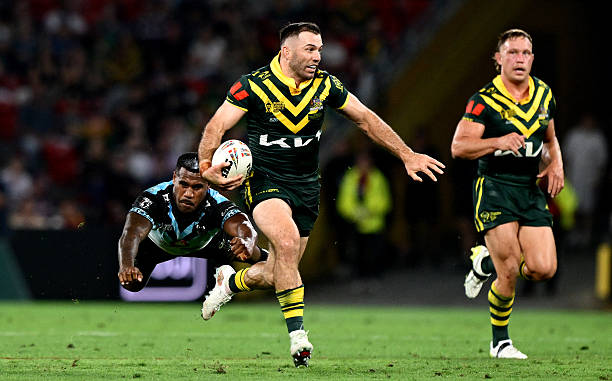
Photo: Getty Images
James Tedesco at fullback, Sam Walker in the halves and a powerful forward pack headline my ideal Kangaroos line-up as Australia looks to sharpen up after its hard-fought 36–22 victory over Fiji.
Australia remain the favourites to win the 2026 Rugby League World Cup, but the Kangaroos have not been completely convincing in their opening matches. Their 36–22 win over Fiji showed both the attacking talent within Kevin Walters’ squad and the improvements still required if they are to go all the way.
The first half lacked energy and cohesion, allowing Fiji to stay in the contest and expose Australia’s defensive weaknesses. The Kangaroos eventually showed their class and experience after the break, with Tom Trbojevic scoring a hat-trick and James Tedesco producing a major influence in attack.
That performance has strengthened the case for a settled side built around Australia’s most dangerous attacking players, experienced leaders and a forward pack capable of controlling the middle.
Here is my best Kangaroos 17, with a breakdown of why every player deserves their place.
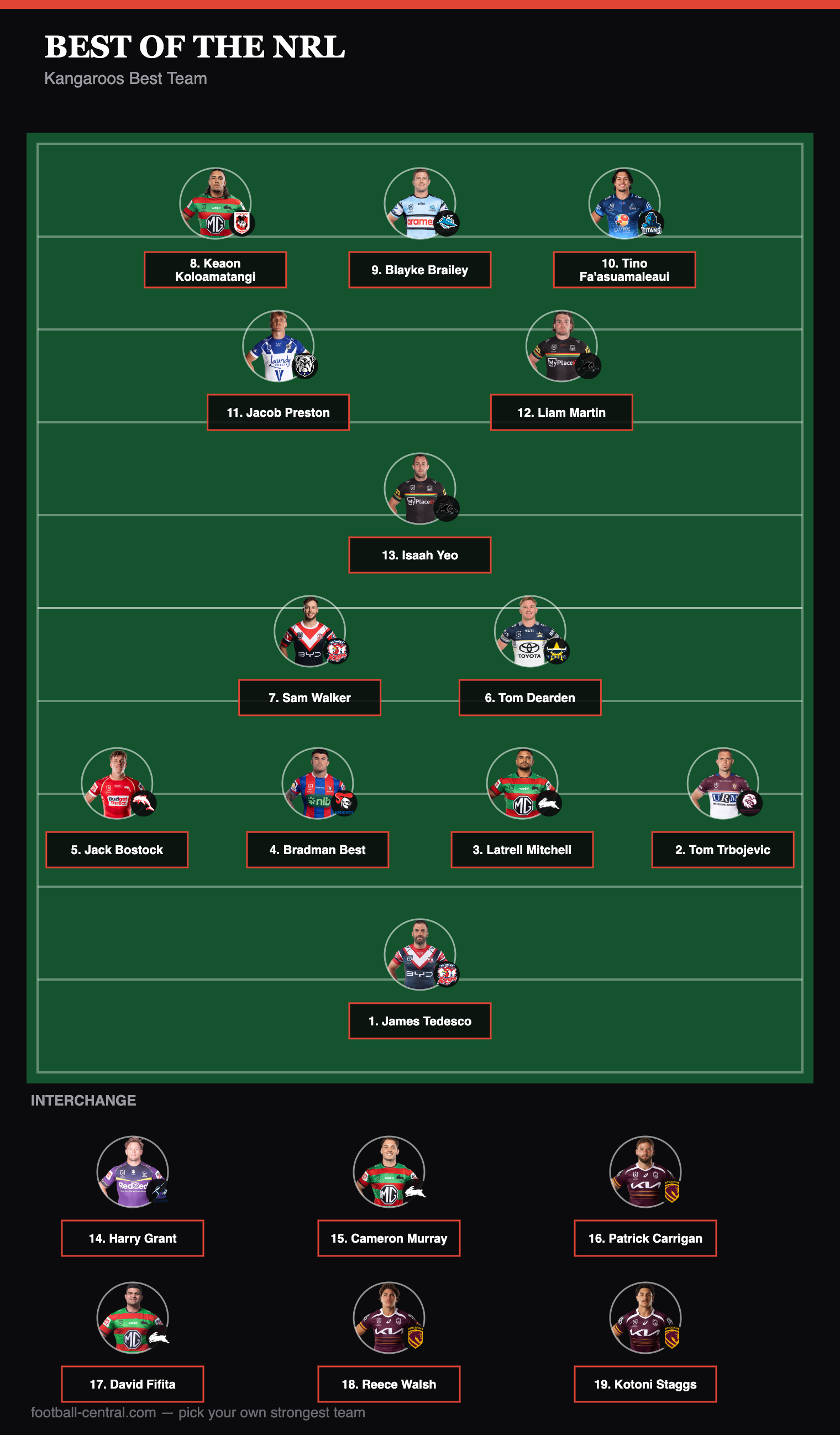
PICK YOURS HERE: https://football-central.com/nrl-team-selector
1. James Tedesco — Fullback
Tedesco gets the nod at fullback because of his experience, support play and ability to turn broken-field opportunities into points. His performance against Fiji was a reminder of what he brings to the Australian side, recording three try assists and more than 150 running metres.
He is constantly involved, communicates well and provides a reliable option when the attack breaks down. Reece Walsh offers extraordinary speed and attacking flair, but Tedesco’s composure and involvement make him my preferred choice for the biggest matches.
2. Tom Trbojevic — Wing
Trbojevic has earned his place after scoring a hat-trick against Fiji. His finishing, ability to find space and strength close to the line make him one of Australia’s most dangerous attacking weapons despite it being his third best position.
Although he is naturally associated with the fullback position or in the centres, his ability to finish chances makes him an excellent option on the wing in this line-up. Keeping him on the edge also allows Tedesco to operate at fullback, giving Australia two players capable of creating something from nothing.
3. Latrell Mitchell — Centre
Mitchell brings power, skill and big-game experience to the centres. He can break tackles, create opportunities for his winger and provide a genuine attacking threat close to the line.
Australia need players who can turn half-chances into tries against the stronger teams, and Mitchell has the ability to do exactly that. His combination of strength and ball-playing also gives the Kangaroos another option when the attack becomes predictable.
4. Bradman Best — Centre
Best gets the other centre position because of his strength, direct running and potential to develop into a major international performer. He is a powerful ball-runner who can help Australia win the physical contest on the edges.
There is still room for improvement in his decision-making and defensive consistency, but his physical attributes are suited to Test football. With Mitchell alongside him, Australia would have two centres capable of making metres and putting opposition defenders under pressure.
5. Jack Bostock — Wing
Bostock retains his place because of his size, finishing ability and potential to become a reliable long-term option for Australia. He offers a strong running game and gives the Kangaroos another powerful outside back.
The challenge for Bostock is to become more involved when Australia are struggling to generate momentum. If the forwards can provide quicker play-the-balls, he should have more opportunities to use his strength and speed on the edge, in addition to his elite ball-catching ability.
6. Tom Dearden — Five-eighth
Dearden gets the five-eighth role because he provides energy, direct running and a willingness to take the line on. Australia need a playmaker who can challenge defenders rather than simply shift the ball from side to side.
He had a difficult night against Fiji as the Kangaroos struggled for fluency, but the solution should be better combinations and a stronger platform through the middle. Dearden’s running game can complement Walker’s kicking and passing, provided the pair settle into their roles.
7. Sam Walker — Halfback
Walker is my choice at halfback because he offers attacking instinct, a strong kicking game and the ability to create opportunities when the defence is set. His contribution against Fiji included a try and a penalty goal along with his conversions, demonstrating his value on the scoreboard.
He is still developing at international level, but his confidence and creativity give Australia a different dimension in attack. Pairing him with Dearden would create a balance between a halfback who can organise and attack through kicking and passing, and a five-eighth who can challenge the line.
The combination will need time, but it has the potential to become one of Australia's biggest strengths.
8. Keaon Koloamatangi — Prop
Koloamatangi earns the starting prop position for his power, offloading game, and ability to bend the defensive line. Australia need their starting forwards to establish dominance early, particularly after Fiji demonstrated that the Kangaroos can be challenged through the middle.
Koloamatangi can provide damaging carries and help create the platform Walker and Dearden need. His challenge is to turn that physical potential into sustained forward dominance from the opening whistle.
9. Blayke Brailey — Hooker
Brailey gets the nod at hooker because of his service from dummy-half, work rate and ability to keep the attack moving. His performance against Fiji showed why he is a genuine option in the position, with Australia needing greater consistency around the ruck.
The hooker is crucial to the balance of this side. Quick service can put the opposition on the back foot, while smart decisions around the ruck can create space for Dearden and Walker to attack. Brailey needs to help Australia play with greater tempo from the beginning.
10. Tino Fa’asuamaleaui — Prop
Tino is a key part of my starting pack because of his size, aggression and ability to generate momentum through the middle. Australia need a forward who can make the opposition work hard in defence and help establish a platform for the rest of the team.
His presence alongside Koloamatangi would give the Kangaroos a formidable pair of starting props. If both can consistently win the contact battle, Australia’s playmakers should have far more opportunities to control matches.
11. Jacob Preston — Second row
Preston gets the edge position because of his work rate, defensive effort and ability to contribute across the field. He is a player who can do the tough work without needing constant involvement in attack, but when called upon is one of the best try scoring forwards.
Australia need their second-rowers to be reliable in defence while still offering a threat when opportunities appear. Preston brings energy and discipline, and his combination with the outside backs will be important in preventing opponents from targeting the edges.
12. Liam Martin — Second row
Martin is one of the players I would want in the side for a major international match. His toughness, defensive intensity and ability to play with aggression make him an ideal second-rower for a team that needs to set the physical standard.
He can help Australia control the middle, close down opposition playmakers and provide strong carries when the team needs to get out of its own end. Martin also brings valuable experience in high-pressure matches, something that becomes increasingly important as the tournament progresses.
13. Isaah Yeo — Lock
Yeo remains the natural leader of this side. His passing, defensive organisation and ability to link the forwards with the halves make him one of the most important players in the Australian squad.
He is not simply a middle forward who carries the ball; he helps the entire attack function. His distribution can create space for Martin and Preston, while his communication helps keep the defensive line organised.
There is one important caveat: Yeo has been managing a pectoral injury. His place in the best side depends on being fit enough to perform at his usual level. If he cannot, Australia will need to adjust its middle rotation rather than risk its captain.
14. Harry Grant — Hooker
Grant is the ideal impact hooker. His speed around the ruck, creativity and ability to exploit tired defenders can change the tempo of a match.
Starting Brailey and bringing Grant on gives Australia two different styles at dummy-half. Grant can inject pace when the forwards begin to tire and help turn a close contest in the Kangaroos’ favour.
15. Cameron Murray — Lock/forward
Murray offers versatility, toughness and excellent defensive work. He can cover the middle and second row, giving Walters flexibility if the match does not follow the expected pattern.
His ability to maintain intensity off the bench is particularly valuable. Against Fiji, Australia needed more consistent energy through the middle, and Murray is the type of player who can help provide it.
16. Patrick Carrigan — Prop/forward
Carrigan brings work rate, aggression and consistency. He can play through the middle and help Australia maintain pressure when the starting forwards leave the field.
His selection would allow the Kangaroos to keep a high standard of effort throughout the match rather than experience a significant drop-off during rotations. Carrigan is also the type of forward who can set the tone in a physical Test.
17. David Fifita — Edge forward
Fifita is the attacking weapon in my interchange. His size, strength and ability to break tackles give Australia a different threat against tiring defenders.
He can play on an edge and help create opportunities for the outside backs, or be used in a more direct role when Australia need to make ground. His challenge is to maintain defensive consistency, but his attacking upside makes him a valuable option late in matches.
Reece Walsh — Fullback/utility
Walsh is unlucky to miss the starting side. His speed, support play and ability to create long-range tries make him one of the most exciting players in the squad. However, I prefer Tedesco’s involvement and composure at fullback for the biggest matches. Walsh remains an outstanding option if Australia needs a change of pace or an attacking spark.
Kotoni Staggs — Centre/wing
Staggs is a powerful alternative in the centres/wing and provides valuable depth. His ability to run hard and challenge defenders makes him a strong option if injuries or form force a change. Mitchell and Best get the starting nod in this team, but Staggs is more than capable of pushing for a place.
Why this is Australia’s strongest combination
The strength of this team is its balance. Tedesco provides reliability and involvement at fullback, while Trbojevic, Mitchell and Best offer size and strike power in the backline. Walker and Dearden give Australia a complementary halves combination, and Brailey provides the service needed to keep the attack moving.
The forward pack is designed to establish a platform early. Koloamatangi and Tino bring size and power, Martin and Preston provide energy on the edges, and Yeo links everything together at lock. Grant, Murray, Carrigan and Fifita then offer a mix of speed, work rate, toughness and attacking impact from the bench.
The 36–22 win over Fiji showed that Australia have the talent to overcome difficult periods, but they cannot afford to start slowly against the tournament’s strongest teams. The Kangaroos need greater energy from the opening whistle, more consistent dominance through the middle and a settled halves combination.
Comments (0)
Sign in to comment, like or dislike.
Loading…