
PNG Chiefs Score Major Court Victory as New Zealand Rugby's Legal Challenge Takes a Hit
The Chiefs will go ahead with their logo and jersey for now
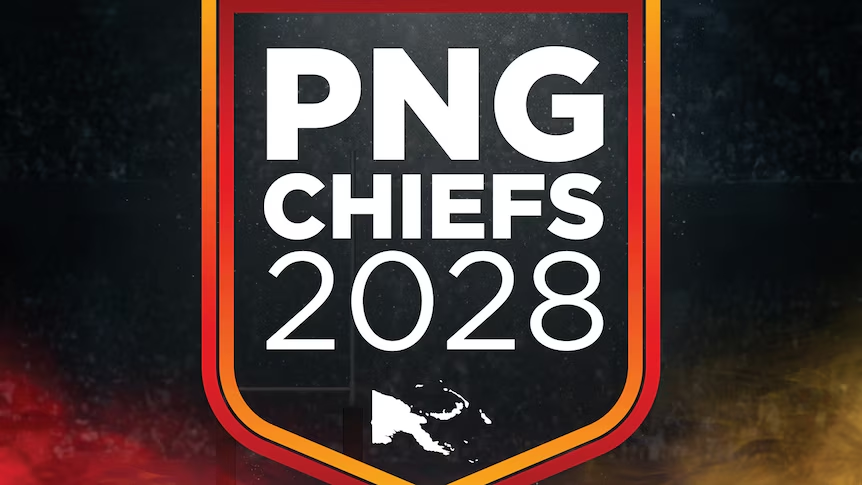
Photo: png_chiefs_official/Instagram
The NRL's incoming Papua New Guinea franchise has received a significant boost after a New Zealand court rejected an attempt to prevent the club from using the Chiefs name, although the legal battle is far from over.
The Papua New Guinea Chiefs have won the first major round of their legal battle with New Zealand Rugby, with the High Court rejecting an application for an interim injunction that sought to prevent the NRL's newest franchise from using its name in New Zealand.
The decision, handed down in Wellington on Friday, October 16, allows the PNG franchise to continue preparing for its planned logo and jersey unveiling next week without an immediate court order forcing it to stop using the Chiefs identity.
However, the dispute is not over, with New Zealand Rugby continuing to pursue a final injunction against the name.
Why Are New Zealand Rugby Taking PNG to Court?
The dispute centres on the use of the name 'Chiefs', which is already associated with the Waikato-based Super Rugby Pacific club.
New Zealand Rugby argues that the established Chiefs brand has built significant recognition and commercial value over three decades, and that the arrival of an NRL team using the same name could create confusion among supporters and damage the existing club's reputation.
The organisation has sought to prevent the Australian Rugby League Commission from using the names 'PNG Chiefs', 'Chiefs' or similar branding in New Zealand.
The Super Rugby Chiefs have competed since 1996, while the PNG franchise is preparing to enter the NRL in 2028.
New Zealand Rugby has maintained that its legal action is about protecting its intellectual property and established brand, rather than opposing rugby league's growth in Papua New Guinea.
The ARLC, meanwhile, has committed to defending the PNG team's name.
What Did the Court Decide?
The High Court's latest decision represents an important preliminary win for the NRL and its incoming expansion club.
New Zealand Rugby had sought an interim injunction ahead of the PNG Chiefs' planned branding launch, effectively attempting to prevent the team from using the disputed name while the wider legal case continued.
The judge rejected that application after hearing arguments about the potential consequences for the expansion franchise, including the possible impact on its efforts to recruit players ahead of its inaugural NRL season.
The decision means the PNG Chiefs can continue with their current branding for now.
Importantly, the ruling does not settle the underlying trademark dispute or establish that the PNG franchise has definitively won the case. The application for a final injunction remains before the court, and further legal action in Australia is also being considered.
Peter V'landys Fires Back at New Zealand Rugby
The legal dispute has also reignited tensions between rugby league and rugby union.
ARLC chairman Peter V'landys has strongly criticised New Zealand Rugby's position, describing its actions as hypocritical.
V'landys has pointed to the Auckland Blues, who entered Super Rugby in 1996 despite New South Wales having a long-established association with the Blues name in rugby league.
His argument is that sporting organisations should be able to share nicknames in certain circumstances, particularly when the teams compete in different competitions.
New Zealand Rugby disagrees, arguing that the overlap between the two sports in the same markets creates a genuine risk of confusion for supporters and commercial partners.
That disagreement is now at the centre of a legal fight that could have major implications for the PNG franchise's identity.
When Will the PNG Chiefs Reveal Their Jersey?
The PNG Chiefs are scheduled to unveil their inaugural logo and supporter jersey in Port Moresby on Wednesday, October 21.
The launch is an important milestone for the incoming franchise as it builds its identity ahead of its planned NRL debut in 2028.
The court's decision means the club can continue preparing for that unveiling without an interim injunction preventing the use of its name.
PNG Chiefs chief executive Lorna McPherson welcomed the decision and confirmed the club's intention to proceed with the launch.
With the team expected to become a major sporting institution in Papua New Guinea, establishing its branding is an important step in building a supporter base and attracting players.
Could the PNG Chiefs Still Be Forced to Change Their Name?
Yes. Despite the preliminary victory, the possibility of a name change has not been ruled out.
New Zealand Rugby's application for a final injunction remains unresolved. If the court ultimately rules against the ARLC, the PNG franchise could face significant pressure to alter its branding in New Zealand.
The dispute could also extend beyond New Zealand, with legal action in Australia being considered.
For the NRL, the stakes are significant. A forced rebrand could create additional costs and complications at a time when the expansion club needs to establish itself, recruit players and build commercial partnerships.
For New Zealand Rugby, the case is about protecting a name and identity that it believes has considerable value.
The final outcome will determine whether the two clubs can continue using the Chiefs name or whether one organisation will have to change course.
What Happens Next?
For now, the PNG Chiefs have avoided an immediate legal setback and can continue towards their planned branding launch.
The next major development will be the court's consideration of the final injunction application, which will determine whether New Zealand Rugby can ultimately prevent the NRL franchise from using the disputed name.
Until then, the PNG Chiefs remain on track to continue their preparations for their planned 2028 entry into the NRL.
The preliminary decision is a positive result for the expansion club, but the most important legal battle is still ahead.
Comments (0)
Sign in to comment, like or dislike.
Loading…