
NRL’s £30m Super League Deal Sparks Power Struggle
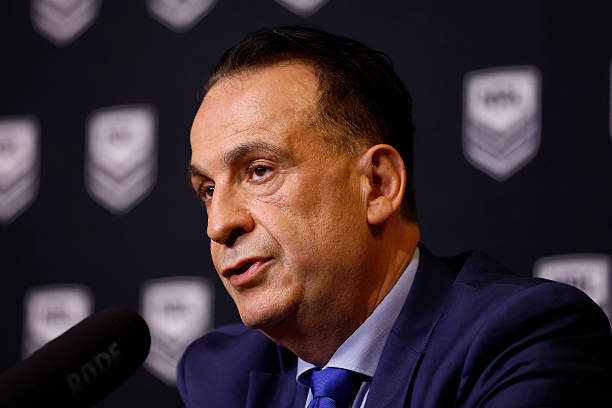
Photo: Getty Images
A proposed NRL investment worth more than £30 million could reshape rugby league in Britain, but a growing dispute over London Broncos’ promotion has exposed the difficult questions surrounding the deal.
A major behind-the-scenes battle is unfolding between the NRL and Super League, with a multimillion-pound investment proposal threatening to become a test of who will control the future of rugby league in the Northern Hemisphere.
NRL chairman Peter V’landys is pushing to invest in the British game, with the proposal reportedly worth around £30–35 million over five years. However, negotiations have reached a critical stage, with the future of London Broncos emerging as a major obstacle to an agreement.
According to reports from Total Rugby League and Serious About Rugby League, the NRL has set October 15 as a deadline for Super League to respond to its latest proposal.
The investment could provide a significant financial boost to the English competition, but it may also give the Australian governing body a greater say in how Super League is managed.
London Broncos at the centre of the dispute
The biggest point of contention is the proposed inclusion of London Broncos in an expanded 15-team Super League for 2027.
The Broncos enjoyed a successful 2026 campaign, winning all three domestic trophies in the second tier. Despite that success, they finished 16th in the Rugby Football League’s IMG gradings, below Barrow Raiders and outside the usual top-flight qualification positions.
Under the current grading system, clubs are assessed across areas including performance, facilities, finances and fan engagement. The rankings are used to determine which teams qualify for Super League.
However, V’landys has made it clear that London’s inclusion is central to the NRL’s investment proposal.
The NRL sees the capital as an important market for growing rugby league, with V’landys pointing to the large Australian population living in London as a potential audience for the sport.
That commercial argument has created an uncomfortable question for Super League: should a club that falls outside the usual qualification positions be admitted because its presence is important to a major investment deal?
Super League clubs divided over the proposal
The prospect of London joining the competition has not been universally welcomed.
Leigh Leopards owner Derek Beaumont has argued that London should not be promoted without following an appropriate process. His concerns reflect a wider debate about whether the existing grading framework should be followed when a significant financial opportunity is at stake.
Super League clubs also have practical issues to resolve. Adding a 15th team would affect the fixture schedule, potentially requiring bye rounds and changes to existing arrangements.
Hull KR chief executive Paul Lakin has indicated that the proposed partnership could be transformative for the sport, but has also stressed the importance of getting the financial terms and scheduling right.
The clubs held discussions over the issue on October 9 but did not reach a final resolution, according to reports.
The situation leaves Super League weighing the potential benefits of outside investment against concerns about fairness, governance and the long-term consequences of changing the competition’s structure.
What would the NRL gain?
The proposed deal is about more than providing financial assistance to a competition on the other side of the world.
The NRL has established itself as one of rugby league’s strongest commercial organisations, and a closer relationship with Super League could help create a more connected international sport.
Greater investment could support the British game’s commercial growth, strengthen its clubs and potentially improve opportunities for player development and recruitment.
There are also potential broadcasting opportunities. Reports have suggested that a partnership could involve DAZN, the streaming company, alongside Super League’s existing broadcasting arrangements with Sky Sports.
But the possibility of the NRL gaining greater management influence is likely to be a central consideration for clubs deciding whether to accept the proposal.
Supporters of the deal could argue that stronger financial backing and commercial expertise would help Super League compete for attention and revenue. Those concerned about the arrangement may question how much independence the British competition would retain.
The final terms will therefore matter just as much as the headline investment figure.
A defining decision for British rugby league
The stakes extend beyond London Broncos.
If the deal proceeds, it could establish a new relationship between the two major professional rugby league competitions, with potential consequences for governance, broadcasting, recruitment and the sport’s international ambitions.
If it fails, Super League will need to consider how it can pursue its own growth plans without the proposed NRL funding.
London’s position has become the clearest symbol of the disagreement. The NRL views the club as an important part of its commercial vision, while critics argue that the established qualification process should not be bypassed simply to secure investment.
Neither side can afford to ignore the other’s concerns. The NRL needs a workable partnership, while Super League must decide whether the financial opportunity justifies the conditions attached to it.
With the reported October 15 deadline approaching, rugby league is facing a potentially defining moment.
The question is no longer simply whether the NRL wants to invest in Super League. It is whether both sides can agree on a deal that brings new money into the British game without creating lasting divisions over who gets to make the decisions.
Comments (0)
Sign in to comment, like or dislike.
Loading…