
Inside Brighton’s Blueprint: How Smart Scouting, Big Sales and an Attacking Identity Have Built a Premier League Contender
Brighton are on fire at the moment, but can their effective model translate to trophies?
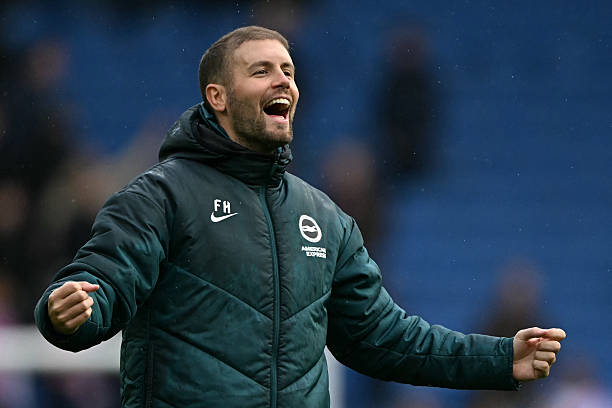
Photo: Getty Images
Brighton and Hove Albion have become one of English football’s most admired clubs by doing things differently.
From their data-driven recruitment and ability to sell stars for huge fees to their commitment to attacking football, the Seagulls have created a model that challenges the traditional idea that success is determined by spending power alone.
Brighton are no longer simply the club that occasionally upsets a giant or discovers an exciting young player before everybody else. They have become an example of how a modern football club can be structured to compete consistently at the highest level.
Their rise has been built on several interconnected ideas: identify talent before the market catches up, develop players in a clear footballing environment, sell when the price is right, reinvest intelligently and maintain a recognisable style of play.
It is a strategy that requires patience, strong leadership and a willingness to make decisions that might not immediately satisfy supporters. It also carries risks. Not every signing succeeds, not every managerial appointment works perfectly, and replacing a star is never as simple as finding another name in a database.
Yet Brighton’s recent history suggests that their approach is about much more than luck.
With Fabian Hürzeler’s side making an impressive start to the 2026–27 Premier League season, Brighton’s model deserves a closer look.
How does the club operate, why are they so effective in the transfer market, and can their approach take them from an established Premier League side to a genuine Champions League regular?
Tony Bloom and the foundations of Brighton’s rise
Brighton’s modern success begins with owner and chairman Tony Bloom, whose investment and long-term planning have helped transform the club’s position in English football.
The Seagulls’ rise has not followed the traditional route of a wealthy owner arriving and attempting to purchase immediate success. Instead, the club has gradually developed its infrastructure, recruitment operation and footballing identity while moving from the lower divisions into the Premier League.
Bloom’s background in data analysis and betting has attracted considerable attention, but the important point is how Brighton have applied analytical thinking to football decisions.
The club does not need to win every transfer battle against Manchester City, Liverpool, Arsenal or Chelsea. It needs to identify opportunities that those clubs, or the wider market, have not fully recognised yet. That distinction is central to Brighton’s strategy.
Rather than treating every transfer window as an opportunity to assemble an entirely new team, the club works towards a longer-term plan. Recruitment, coaching, player development and financial decisions are all parts of the same process.
Bloom has also stressed the importance of continuing to innovate as rival clubs improve their own recruitment systems. In an interview published by Brighton in October 2025, he discussed the need to keep improving rather than assume that previous success guarantees future results.
The model is therefore not supposed to remain static. It must evolve as competitors learn from Brighton and the transfer market changes.
That is an important part of understanding Brighton. Their advantage is not simply having access to data; it is having an organisation that treats the search for better decisions as an ongoing process.
Recruitment: finding the right player before the price explodes
Brighton’s scouting and recruitment have become among the most discussed aspects of their operation.
The basic idea is straightforward: identify players whose performances, physical attributes, technical skills and potential suggest they could become valuable Premier League footballers, ideally before their reputations and transfer fees rise dramatically.
Executing that strategy is much harder.
A club must assess not only whether a player is talented, but whether that talent will translate to English football, whether the player fits the manager’s tactical requirements, how much development remains and whether the financial risk is justified.
Brighton combine data-led analysis with scouting and football expertise rather than relying on one source of information alone.
Their recruitment operation looks across multiple markets, including South America, Europe and Asia. Bloom has publicly described the club’s willingness to recruit globally, with the focus on finding the right player at the right age and price rather than prioritising a particular country.
Brighton sporting director Mike Cave also discussed the club’s recruitment philosophy with BBC Sport in October 2026, explaining how the Seagulls aim to remain competitive in one of the most demanding leagues in world football.
The report highlighted their emphasis on young players, development and a carefully managed recruitment strategy.
The club’s financial results underline why this approach matters: Brighton were one of only two Premier League clubs to record a profit on transfer spending over the five years covered by that report.
Why data matters — and why it is not enough
Football analytics can help clubs compare players across different leagues, identify statistical outliers and uncover strengths that traditional scouting might overlook.
For example, a midfielder might not attract much attention because he plays for a relatively obscure lesser-known club. However, his ability to progress the ball, win possession, resist pressure and contribute to attacking sequences could compare favourably with players at much bigger clubs.
Data helps narrow the field. Scouts and recruitment staff then need to investigate the context behind those numbers.
Was the player operating in a particularly favourable system? Can he cope with the pace and physicality of the Premier League? Does he have the decision-making ability to perform against stronger opposition?
There is also the question of personality, adaptability and willingness to learn.
A player can look excellent statistically and still fail to settle at a new club. Brighton’s model cannot eliminate that uncertainty; it attempts to make the decision better informed.
This is why describing the Seagulls as a club that simply buys players identified by an algorithm misses the point. Their advantage comes from combining different kinds of information and building a recruitment process around a clear footballing strategy.
Recruiting for the future, not just the next match
Brighton’s preference for young, high-potential players also creates an opportunity that richer clubs do not always need to pursue.
An established international might offer immediate quality, but that player could command a premium transfer fee and substantial wages. A younger prospect might need more time but offer greater potential for improvement and future resale value.
The challenge is deciding which young players are worth the investment.
Brighton must also avoid filling the squad with prospects who cannot realistically progress into first-team football. Recruitment only works when it is connected to development opportunities, suitable coaching and a clear route into the senior team.
That is why their strategy should be judged on the complete journey from identifying a player to helping them become a Premier League performer, rather than on the initial transfer fee alone.
The art of selling: why Brighton are willing to let stars go
Brighton’s ability to sell important players for substantial fees is just as significant as their recruitment.
For many clubs, losing a leading player represents a major setback. Supporters become attached to their stars, managers want to preserve their strongest line-ups, and a big sale can appear to undermine a team’s ambitions.
Brighton have increasingly demonstrated a different approach. When a player develops beyond the club’s original valuation and a major offer arrives, Brighton can consider the sale as part of the wider strategy rather than automatically treating it as a disaster.
That does not mean every player is available at any price. Nor does it mean supporters should be expected to welcome the departure of a favourite.
It means the club can recognise that the transfer market creates opportunities to strengthen several areas of the squad with the proceeds from one major deal.
The departures of players such as Moisés Caicedo, Marc Cucurella, Alexis Mac Allister, Yves Bissouma and Ben White illustrate how Brighton have sold highly sought-after talent during their rise.
Each transfer came with its own circumstances, but collectively they demonstrate how the club has operated in a market where bigger sides can offer higher wages, more prestigious competitions and the prospect of competing for major trophies.
Brighton cannot always match those attractions. They can, however, negotiate from a position of strength when their players attract serious interest.
Turning one sale into several opportunities
Imagine a club selling one established star for a major fee. Instead of spending the entire amount on a single replacement, it can recruit a younger player for that position, strengthen another area of the squad and invest in future prospects.
If those additions develop successfully, the club may improve its overall depth while retaining the potential to generate future transfer income. This is the logic behind Brighton’s approach, and it works very well for them.
It is not simply about buying a player cheaply and selling him expensively. The club must also ensure that the team continues to function after the departure.
A replacement has to adapt to the league, the tactical system and the demands of the position. Meanwhile, other players may need to take on greater responsibility.
The timing of a sale matters, too. Losing several key players in one window could create problems that no recruitment department can immediately solve.
Brighton’s challenge is therefore to balance financial value with footballing continuity.
The risk of becoming a selling club
There is a limit to how far the strategy can go without affecting sporting ambition.
Supporters want to see their best players stay long enough to build a team capable of competing for trophies. A club that constantly sells its leading performers risks creating the feeling that progress is temporary.
There is also no guarantee that a replacement will reach the same level. A successful transfer model can still produce disappointing signings, and the financial return from a sale does not automatically translate into better results on the pitch.
Brighton must therefore decide when to sell, when to hold on to a player and when the sporting benefits of keeping someone outweigh the potential financial gain.
Their long-term ambition will depend on getting that balance right.
From Moisés Caicedo to the next generation: building a repeatable cycle
One reason Brighton’s model attracts so much attention is that their player sales have not always been followed by an immediate collapse.
The departures of Caicedo and Mac Allister for example, could have left major gaps in midfield. Instead, Brighton have continued to recruit and develop players while adjusting the composition of their squad.
That is the real test of a recruitment strategy. Any club can discover an outstanding player. A smaller number can repeatedly find talent, develop it, sell it at a premium and remain competitive after the departure.
Brighton’s model attempts to create a cycle:
1. Identify potential: Find players whose ability and development prospects may be undervalued by the market.
2. Recruit strategically: Bring them into an environment suited to their strengths and long-term development.
3. Develop and expose them: Give players the coaching, training and opportunities needed to improve.
4. Create market value: Strong performances and progress increase their importance to Brighton and their attractiveness to other clubs.
5. Reinvest carefully: Use transfer income and other resources to strengthen the squad while planning for future departures.
The cycle can produce both footballing and financial benefits, but it is not automatic. A young player might fail to adapt, a promising signing might struggle with injuries, or the club might sell at the wrong moment.
Brighton must continually replenish their talent pool while ensuring that enough quality remains in the first team.
That is why their recruitment department is so important. It is not only searching for the next breakout star; it is helping the club prepare for the next inevitable change.
The football: why Brighton want the ball
Recruitment explains how Brighton assemble their squads, but their style of football is what brings the strategy to life.
Under head coach Fabian Hürzeler, Brighton have maintained an identity built around technical quality, aggressive pressing, intensity and the willingness to play proactively.
The details change depending on the opponent and the players available, but Brighton generally want to be involved in the game rather than spend long periods sitting deep and hoping for counter-attacking opportunities.
They seek to build attacks through possession, move opponents around and create openings through combinations, movement and players receiving the ball between the lines. That approach places significant demands on recruitment.
A team that wants to build from the back needs defenders and goalkeepers who are comfortable making decisions under pressure. Midfielders must be able to receive the ball, find forward passes and retain possession when opponents close them down.
Attackers need more than speed. They must understand when to stretch the pitch, when to move inside, when to press and when to create space for teammates.
Brighton’s preferred style therefore gives the recruitment department a clearer idea of what to look for.
The club is not simply buying the most talented player available in each position. It is trying to assemble players whose qualities can work together within a recognisable system.
Brighton’s approach without the ball is just as important.
Hürzeler has placed considerable emphasis on intensity, pressing and winning possession back high up the pitch. The club’s own tactical analysis in October 2026 highlighted Brighton’s ability to regain the ball in the final third and the defensive improvement they had shown during the opening weeks of the campaign.
The idea is to make life uncomfortable for opponents. Rather than allowing the opposition to settle into its passing patterns, Brighton try to close passing lanes, force rushed decisions and turn defensive pressure into attacking opportunities.
Winning the ball close to the opponent’s goal can be particularly valuable because the team may be able to attack before the defence has reorganised.
However, pressing is physically demanding and tactically risky. If the first line of pressure is bypassed, large spaces can appear behind it. Players need to press together, recognise when to engage and maintain enough positional discipline to avoid leaving the defence exposed.
This is where recruitment and coaching meet. Brighton need players with the physical capacity, tactical awareness and work rate to execute the system over an entire match, not just players who look good when the team has possession.
Why their football can be difficult to play against
Brighton’s attacking threat does not have to depend on one prolific goalscorer.
The Premier League’s 2026–27 preview highlighted how widely Brighton distributed their goals during the previous campaign, with 19 different players scoring in the league in 2025–26.
That spread of contributions can make a team harder to defend against. Opponents cannot focus exclusively on one striker if midfielders, wingers and defenders also pose a threat.
It also reflects the way Brighton try to create chances through the collective structure of the team. Overlapping defenders, midfield runs and movement between the lines can all contribute to attacks.
The trade-off is that a side without a consistently dominant centre-forward can sometimes struggle to convert territorial control into goals, particularly against opponents who defend deep.
Brighton’s style needs both creative variety and reliable finishing. Possession alone is not enough; the team must turn its control into clear chances and take them.
Fabian Hürzeler: the manager inside the model
Brighton’s recruitment strategy would mean little without a head coach capable of turning a diverse squad into a functioning team.
Hürzeler inherited a club that already had a recognisable footballing philosophy. His job has been to build on that foundation while introducing his own tactical ideas and adapting the team to the demands of the Premier League.
The relationship between the manager and recruitment department is crucial.
If the club signs players based on a long-term strategy but the coach wants a completely different style of football, the two sides can end up working against each other. Players may be recruited for roles they never fill, and money can be wasted on qualities the team does not use.
Brighton’s approach aims to reduce that risk by linking recruitment to the way the team is expected to play.
That does not mean the manager has no influence over signings. Rather, the objective is to combine the coach’s requirements with the club’s broader view of player value, squad development and future needs.
A coach still has to decide when a young player is ready, how to organise the team and how to respond when a tactical plan fails.
The system should support the manager, not remove the need for good management.
Hürzeler’s challenge is to keep Brighton’s identity intact while making the adjustments required to win different types of matches. A team cannot press relentlessly in every situation, and it must know how to manage games when opponents successfully disrupt its preferred style.
The strongest clubs have a clear identity without becoming predictable.
Brighton’s remarkable start — and the Champions League question
Brighton’s early results in 2026–27 have provided a compelling demonstration of their attacking potential.
After seven Premier League matches, the Seagulls have scored 23 goals. A total that placed them among the most prolific starts in the competition’s history. Their 5–0 win over Crystal Palace was particularly striking, delivering their biggest victory over their rivals in 70 years.
The Premier League noted that only three sides in the competition’s history had scored more goals in their first seven matches of a season. Brighton were also competing near the top of the table, raising the possibility of a historic push towards Champions League qualification.
It is an exciting position for a club whose success has often been measured by how well it can compete with teams possessing far greater financial resources.
But an excellent opening seven games do not guarantee a top-four finish.
The Premier League is a long season, and opponents will adjust to Brighton’s attacking patterns. Injuries, suspensions and fixture congestion can test the depth of the squad, particularly when domestic commitments are combined with European football.
Brighton must also show they can win when their pressing is less effective or when they face teams determined to defend deep.
Champions League qualification would represent another major milestone. It would also introduce new challenges, including a heavier schedule, greater demands on squad depth and increased pressure to retain leading players.
The club’s recruitment and development model may be well suited to navigating those demands, but the next step will require more than identifying talented footballers. Brighton need enough proven quality to compete across multiple competitions without losing the intensity that makes them effective.
What other clubs can learn from Brighton
Brighton’s approach offers several lessons for clubs trying to compete with larger rivals.
First, recruitment needs a clear purpose. Data and scouting are most useful when clubs know what qualities they want and how those qualities fit the way the team plays.
Second, player development is a competitive advantage. Signing young talent is not enough. Clubs must provide coaching, suitable opportunities and a realistic pathway towards senior football.
Third, selling well is only valuable if the team remains competitive. Transfer income matters, but the real objective is to turn that income into a stronger or more sustainable squad.
Fourth, continuity matters. Recruitment, coaching and club leadership need to work towards compatible objectives. Frequent changes of direction can undermine even a well-funded operation.
Finally, no model is finished. Brighton’s own leadership has recognised that other clubs are improving their analytics and recruitment systems. The Seagulls cannot assume that methods which gave them an advantage several years ago will automatically keep them ahead.
The challenge is to continue adapting without abandoning the principles that made the club successful.
Brighton’s rise is often reduced to a familiar story: buy young players cheaply, sell them for huge fees and repeat the process.
That description captures part of the strategy, but it misses the wider picture.
Their recruitment works alongside player development, tactical planning, coaching and a leadership structure focused on long-term competitiveness. The aim is to create a club that can absorb change including the departure of important players, without having to start again every season.
The football matters just as much as the finances. Brighton want players who can operate in a demanding, high-intensity system, press intelligently and contribute to an attacking style built around collective movement and technical quality.
Their current form suggests those ideas can produce spectacular results. But the real measure of the model will be what happens over the next few seasons: whether Brighton can maintain their Premier League position, compete consistently in Europe and eventually turn their progress into major silverware.
The Seagulls have already demonstrated that a club does not need the biggest budget to build an intelligent and competitive operation.
The next challenge is proving that their model can take them from being one of English football’s best-run clubs to one of its most successful teams.
Comments (0)
Sign in to comment, like or dislike.
Loading…