
Harry Kane vs Kylian Mbappé vs Lamine Yamal: Who Will Win the 2026 Ballon d’Or?
It's a 3-horse race for footballs biggest individual prize
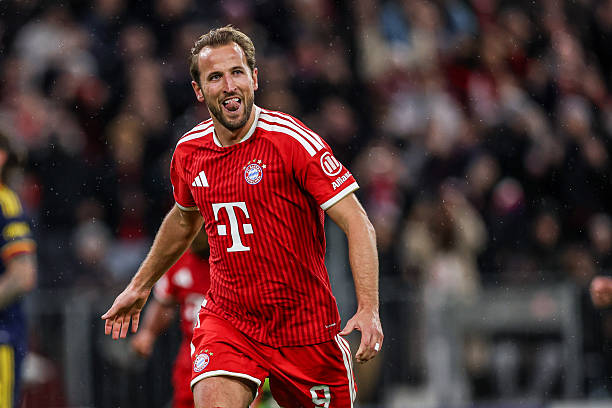
Photo: Getty Images
With the 2026 Ballon d’Or winner set to be announced, which player has the strongest case under the award’s official criteria?
The Ballon d’Or is not simply awarded to the player who scores the most goals. Individual performances, team achievements and sportsmanship all matter, with individual performances and decisive influence ranked first in the official criteria.
That makes the race between Kane, Mbappé and Yamal particularly interesting. All three have produced outstanding campaigns, but their cases look very different when the statistics, trophies and international performances are examined together.
The statistical breakdown
The following figures cover the 2025/26 season and the relevant international matches, within the Ballon d’Or assessment period.
Goals for club and country: Harry Kane (73), Kylian Mbappe (58), and Lamine Yamal (25)
Assists for club and country: Harry Kane (8), Kylian Mbappe (13), and Lamine Yamal (20)
Trophies: Harry Kane (Bundesliga, DFB-Pokal, third place at the World Cup), Kylian Mbappe (World Cup, La Liga, and UCL Golden Boot), and Lamine Yamal (La Liga and the World Cup)
The numbers give Kane a substantial advantage in overall attacking output. His 73 goals and eight assists produced 81 goal contributions, 10 more than Mbappé and 36 more than Yamal.
However, the figures do not tell the whole story. Mbappé scored 58 goals and supplied 13 assists, while Yamal's 20 assists highlight a creative contribution that cannot be captured by goals alone.
Harry Kane: The statistical favourite
Kane has arguably the clearest individual-performance case of the three.
The Bayern Munich striker scored 61 goals across all competitions for his club, including 36 in the Bundesliga and 14 in the Champions League. He added 12 goals for England, finishing the season with 73 goals for club and country.
His 2025/26 campaign was the most prolific of his career, and he won the European Golden Shoe as Europe's leading league goalscorer.
Kane's case becomes stronger when his individual production is combined with Bayern's success. The German side won the Bundesliga and German Cup, while reaching the Champions League semi-finals before losing to eventual winners Paris Saint-Germain.
England also finished third at the World Cup, with Kane scoring six goals at the tournament..
Kylian Mbappé: The big-stage challenger
Mbappé's statistical case is also formidable, even if he trails Kane in total goals and goal contributions.
The Real Madrid forward scored 58 goals and provided 13 assists for club and country during the relevant season. He finished as La Liga's leading goalscorer with 25 goals and topped the Champions League scoring charts with 15.
His World Cup campaign added another major argument. Mbappé scored ten goals to win the tournament's Golden Boot, reinforcing his reputation as a player capable of producing on football's biggest stage.
But there is a significant weakness in his candidacy: Real Madrid failed to win a major trophy, while France finished behind England in the World Cup third-place match.
Under the Ballon d’Or criteria, trophies are not the most important factor, but collective achievements remain relevant. Mbappé's individual numbers are elite, yet his lack of silverware makes his overall case more difficult than Kane's.
Mbappé could still win if voters prioritise his individual performances and decisive goals over the success of his teams.
Lamine Yamal: The creative alternative
Yamal's case is built less around raw scoring numbers and more around his ability to create opportunities, beat defenders and influence Barcelona's attack.
The teenager scored 25 goals and provided 20 assists for club and country during the 2025/26 season. His 45 goal contributions were fewer than Kane's and Mbappé's, but his assist tally was the highest of the three.
Barcelona won La Liga, giving Yamal a major domestic title to support his individual performances. Spain also won the World Cup, although Yamal's own tournament was disrupted by a hamstring injury and he scored only once.
That matters; winning the World Cup strengthens his team-achievement case, but the award is for individual excellence, not simply being part of the winning squad.
Yamal's best argument is that footballing influence should not be measured by goals alone. But he would need voters to place considerable weight on creativity and overall play to overcome the statistical gap.
What do the Ballon d’Or criteria actually say?
The official criteria are ranked in this order:
1. Individual performances, decisive and impressive character.
2. Collective performances and titles won.
3. Class and fair play.
Applying those criteria to the three contenders produces a clearer picture.
Based on the reported season statistics, the official criteria and the pre-ceremony betting market, Harry Kane is my pick to win the 2026 Ballon d’Or.
Kane's advantage is not simply that he scored more goals. He delivered the strongest combined statistical season of the three while helping Bayern win major domestic trophies and reach the Champions League semi-finals.
Mbappé has a compelling case built around his performances in the Champions League and World Cup, but his lack of major trophies works against him. Yamal has the creativity and team success to challenge, although his lower goal contribution total and disrupted World Cup campaign leave him with more ground to make up.
The reported pre-ceremony odds also favour Kane, with Mbappé second and Yamal third. Those odds indicate market expectations rather than guaranteeing the result.
Ultimately, the Ballon d’Or is decided by journalists voting on the full season, not by a statistical formula. But if the criteria are applied in their stated order, Kane has the strongest all-round argument.
Comments (0)
Sign in to comment, like or dislike.
Loading…