
Booing a Welcome to Country at the Football: When Did Respect Become So Difficult?
A Welcome to Country frustrates many people, but booing during it seems disrespectful and unhelpful....
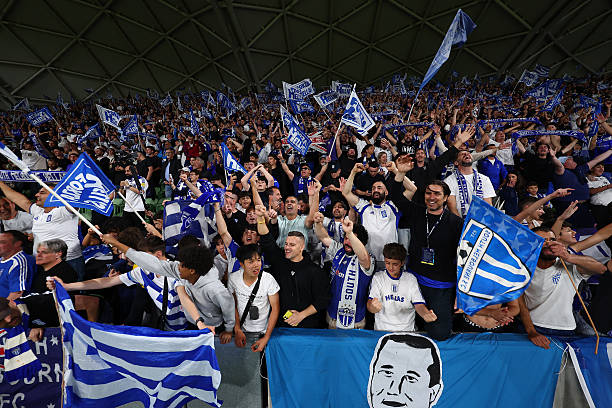
Photo: Getty Images
Football is supposed to bring people together. It brings different cultures, backgrounds and communities into the same stadium, united by a shared love of the game.
But before the Australia Cup final between South Melbourne and Melbourne Victory, a section of the crowd at AAMI Park booed during the Welcome to Country ceremony.
It was an uncomfortable moment before what would become a historic night for Australian football. South Melbourne went on to defeat Melbourne Victory on penalties, becoming the first National Premier Leagues club to win the Australia Cup.
Yet the pre-match incident provided a reminder that the game’s biggest occasions can become about much more than what happens on the pitch.
Football should be a place for everyone
A Welcome to Country is a ceremony performed by an Aboriginal or Torres Strait Islander Traditional Custodian to welcome people onto their Country. It is intended to acknowledge the continuing connection First Nations peoples have with the land.
People have different views about whether these ceremonies should be included at every sporting event. Some see them as a meaningful acknowledgement of Australia's history and Indigenous cultures. Others question their frequency, their place in sport or whether they have become too routine.
Those discussions can take place. There is room for people to ask questions, disagree and debate how sporting organisations should approach ceremonies.
But there is a difference between questioning a practice and booing a person who is standing in front of a crowd to deliver it.
The ceremony at AAMI Park was not a football match, a political debate or a competition between supporters. It was an acknowledgement before the game began. The person delivering it deserved the opportunity to do so without being drowned out.
Disagreement does not have to mean disrespect
One of the strengths of Australian sport is that it brings together people who might disagree about almost everything outside the stadium.
Rival supporters can argue about refereeing decisions, club ownership, ticket prices and the direction of the game. They can challenge decisions made by Football Australia, the A-Leagues or governments. None of that should be off limits simply because a subject is sensitive.
However, the way those disagreements are expressed matters.
Choosing not to participate in a ceremony is different from actively trying to disrupt it. Questioning whether a Welcome to Country should feature before every sporting event is different from directing hostility towards the person delivering one.
The distinction is important because a respectful society should be able to accommodate disagreement without treating every public occasion as an opportunity for confrontation.
It is also worth recognising that a section of the crowd does not represent every supporter in attendance. The behaviour of some spectators should not be used to condemn an entire club, its fanbase or Australian football as a whole.
Australian football has always been shaped by different communities
The Australia Cup final was itself a celebration of the diversity and history of Australian football.
South Melbourne, a club with deep roots in Australia's post-war migrant communities, faced Melbourne Victory, one of the country's best-known professional clubs. Almost 30,000 spectators attended the match, which ended in a dramatic penalty shootout.
Football in this country has been shaped by generations of people who brought their traditions, identities and passion for the sport with them. That history is one of the game's strengths.
Acknowledging First Nations peoples is not a rejection of the contributions made by migrant communities, nor does it diminish the history of clubs such as South Melbourne. Different histories can be recognised at the same time.
If football is to continue growing as a sport that welcomes people from all backgrounds, it should be capable of making space for those histories without turning every acknowledgement into a confrontation.
The debate can continue, but basic respect should remain
The booing at AAMI Park is not an isolated example of controversy surrounding Welcome to Country ceremonies at major sporting and public events. Similar incidents have prompted criticism at other gatherings, including Anzac Day commemorations earlier this year.
That broader debate is unlikely to disappear overnight. Questions about the role, frequency and format of ceremonies will continue to be discussed.
But perhaps the starting point should be simple: people do not have to agree on every tradition or ceremony to treat one another with courtesy.
Sport already has enough hostility. Rivalries are part of football's appeal, but they should be directed towards the contest, not towards making someone feel unwelcome before a ball has even been kicked.
South Melbourne's historic Australia Cup victory deserved to be remembered for the football, the drama and the achievement of an NPL club overcoming a professional opponent.
Instead, the pre-match booing became part of the conversation too. Supporters are entitled to their opinions. They are entitled to question decisions and express disagreement. But a sporting crowd also has a choice about how it conducts itself.
We should be able to debate the place of a Welcome to Country in Australian sport without forgetting the basic respect that makes sharing that space possible.
My overall take is that a "Welcome to Country" is a bit virtue signally, because if an local indigenous representative said it was sacred land and the stadium needed to be knocked down so it could go back to being just bushland or nature, that wouldn't happen and someone else would just be found who wouldn't object.
But booing and being disrespectful at someone who isn't really saying anything controversial, just taking 30 seconds of peoples time is poor taste.
Comments (0)
Sign in to comment, like or dislike.
Loading…