
Attack Wins Games. Defence Wins Titles: Why Xabi Alonso’s Chelsea Tactics Cannot Secure a Title
Brentford had the belt out this morning for Chelsea...
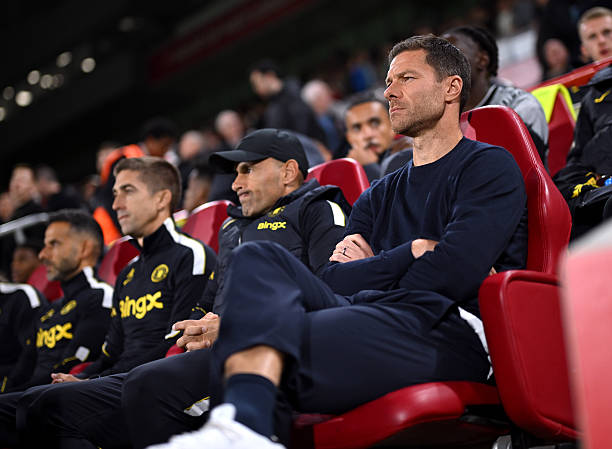
Photo: Getty Images
There is an old football cliché that says attack wins you games, but defence wins you titles.
It may be a cliché, but Chelsea are currently providing a pretty compelling case for why it still matters.
After their 3-0 defeat to Brentford, Chelsea have conceded 12 goals in their opening five Premier League matches which is the most in the division. More concerning is the consistency of the problem: Chelsea have conceded at least twice in every league match under Xabi Alonso.
The problem isn't that Alonso doesn't have a tactical plan. He does.
In fact, there is plenty to like about the attacking philosophy. Chelsea are trying to play vertically, attack space quickly and use their pace and technical quality to punish opponents in transition. The problem is what happens when that plan breaks down, they seem to have no answers.
Alonso has moved Chelsea away from the possession-heavy approach associated with previous versions of the team.
Instead, Chelsea are comfortable allowing opponents to have the ball before attempting to win it back and attack quickly.
The basic defensive shape has often been a 5-2-3, with the wing-backs dropping alongside the three centre-backs.
The idea is relatively simple:
Let the opposition come forward → stay compact → win the ball → attack the space behind them with their fast and technical forwards.
It makes sense when you have players capable of carrying the ball at speed and forwards who can exploit large spaces. Chelsea certainly have plenty of them.
Morgan Rogers, Cole Palmer, and Joao Pedro are all capable of making dangerous runs when space opens up, and are one of the best attacks in the league.
Chelsea don't necessarily need 60 or 70 per cent possession to create chances. But there is a trade-off that hurts their style of play.
If you give the opposition the ball, you have to defend extremely well without it. Chelsea aren't doing that consistently enough, lacking quality and organisation defensively.
The biggest problem is the midfield duo. One of the most interesting aspects of Alonso's system is the reliance on two central midfielders.
When Chelsea defend in their 5-2-3, those two players have an enormous amount of ground to cover. They need to protect the centre. They need to track runners. They need to support the wing-backs. They need to press midfielders receiving between the lines.
And when Chelsea win possession, they are also expected to provide the platform for the transition.
That is a huge workload for the best midfielders in the world. Chelsea failed to sign central midfield cover following Enzo Fernandez's exit, and have played fullbacks in those spots. This makes it very tough on them.
If one midfielder jumps out to press, the other can suddenly be left defending a huge area. If both stay narrow, the opposition can progress through the wide areas.
And if the wing-back moves forward to engage the opposition full-back, the centre-back behind him has to slide across.
Suddenly, Chelsea's defensive structure starts moving like a set of dominoes that can be easily exploited.
The wing-back problem:
This is arguably the most important tactical issue. Chelsea's system relies heavily on their wing-backs. When they have possession, they provide width. When Chelsea defend, they are effectively expected to become part of a back five.
That creates a difficult decision: How aggressively should they press?
If the wing-back stays deep, Chelsea can become too passive and allow the opposition to progress.
If he pushes forward, the centre-back has to move across to cover the space behind him.
That can create gaps between the centre-back and the remaining defensive players.
Squawka's tactical analysis of Alonso's early Chelsea games identified exactly this issue, particularly when Chelsea's defensive block switches between zonal and more man-oriented responsibilities.
It means Chelsea aren't necessarily being beaten because their defenders are individually poor.
They're often being forced into difficult defensive situations by the structure in front of them. Chelsea's focus on attack makes this clearer, with Pedro Neto playing at fullback.
And then there is the transition:
This is where the philosophy becomes particularly dangerous. Chelsea want to attack vertically.
That means when they win possession, the first instinct is often to go forward. But if that attack breaks down after three or four passes, Chelsea can suddenly have players ahead of the ball and space behind them.
The opposition wins possession. Chelsea are now running backwards.
And because their attacking structure is designed to stretch the opposition, their defensive structure can be stretched at exactly the same time.
It's essentially a high-risk equation: More verticality = more attacking opportunities. But also: More verticality = more opportunities for the opposition to attack Chelsea in transition.
Squawka noted that Chelsea's willingness to defend deeper and attack vertically can produce chaotic, end-to-end matches, while greater control in possession could give the defence more protection. This is very apparent when you watch them play.
That is the crucial point. Chelsea don't necessarily need to become a 70-per-cent-possession team. They simply need to learn when not to attack.
Brentford showed the problem perfectly:
The 3-0 defeat to Brentford was almost a perfect example of the dangers. Chelsea went into the match already struggling to keep clean sheets. Then came another set-piece concession.
Mikkel Damsgaard's corner was nodded across goal by Jannik Schuster, with Jaidon Anthony left unmarked to score.
It was the sort of goal that has become far too familiar for Chelsea, with a lack of organisation exposing them off set pieces. Then, when Chelsea pushed forward searching for an equaliser, Brentford punished them in transition.
Kevin Schade broke through before Igor Thiago eventually doubled the lead. Fabio Carvalho then added a third.
Sky Sports described Chelsea's defensive and set-piece problems as continuing under Alonso, while Alonso himself criticised his side's consistency and competitive mentality after the match.
That is the danger of Chelsea's approach. Chelsea are conceding from set pieces.
Again.
Against Brentford, the opening goal came from a corner. It is particularly damaging because set pieces are one of the few situations where a team that dominates possession has no relevance.
You can have 65 per cent possession. You can create 15 chances. You can control the match territorially. Then one corner can undo everything.
If Chelsea want to challenge for major trophies, this simply cannot continue.
The "attack wins games" argument doesn't work forever:
There is nothing wrong with having an attacking identity. The difference is the best sides control the conditions in which they attack, and dictate how the game will be played, not the other way around.
The Premier League won't forgive defensive instability:
Chelsea's early results under Alonso have demonstrated both sides of the argument.
They scored seven goals across their first two league games while also conceding five.
Then came a run of three games without a win, culminating in the 3-0 defeat to Brentford.
Alonso himself has acknowledged that Chelsea aren't currently capable of competing consistently for the full 90 minutes. That's ultimately what has to change.
Chelsea have enough attacking talent to score goals. They don't necessarily need to score three every week. 1 goal can wins you every game of football.
They need to get to a point where one or two goals are enough to win a football match.
Because no matter how exciting your attack is, constantly asking your forwards to score two or three goals just to have a chance of winning isn't a sustainable formula for a title-winning team.
Attack might win Chelsea games.
But until they learn how to defend, control transitions and protect leads, it is difficult to see how this tactical approach can take them all the way to a Premier League title.
Comments (0)
Sign in to comment, like or dislike.
Loading…