
Uruguay Trials Digital Yellow and Red Cards in Football
One of the dumbest new ideas....
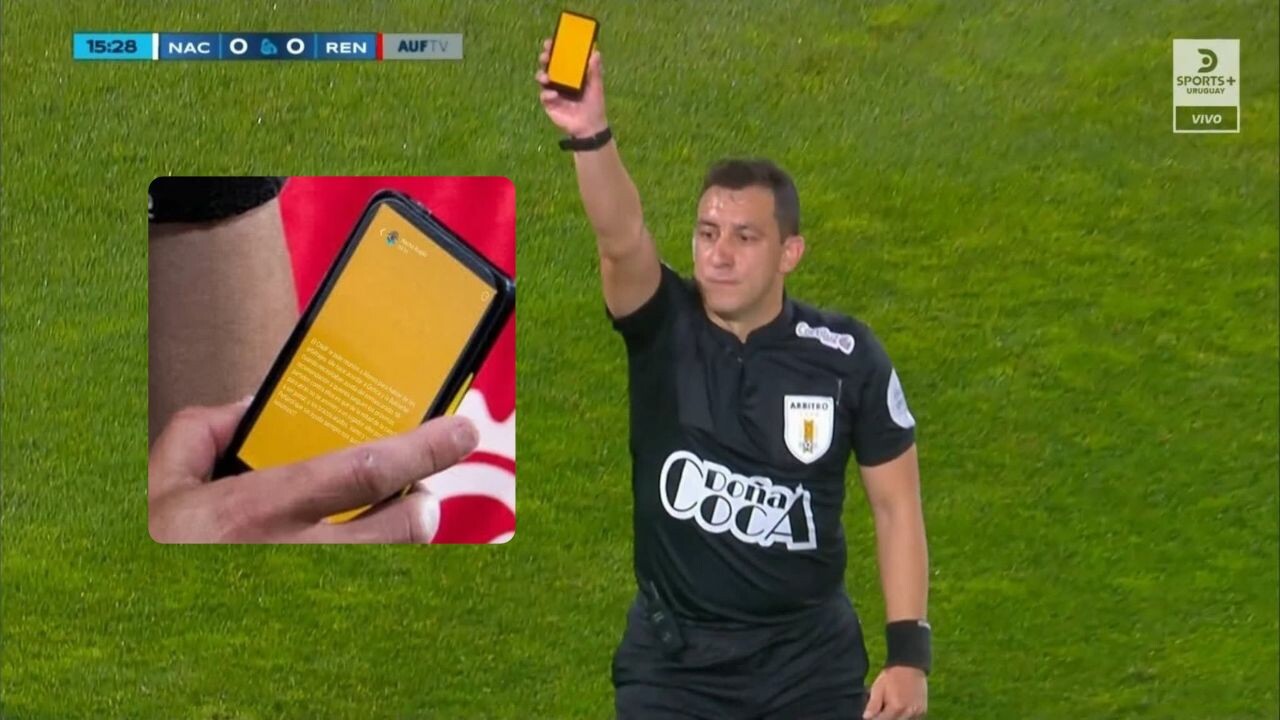
Photo: El Siglo de Torreón
Uruguayan football has trialled an unusual innovation, with referees using an electronic device to display yellow and red cards instead of traditional coloured cards. However, visibility problems have already raised questions about whether the technology is ready for regular use.
Football referees in Uruguay have begun testing digital yellow and red cards, introducing a new approach to one of the sport's most recognisable traditions.
The experimental system replaces the familiar coloured cards with an electronic device resembling a mobile phone. Referees can press buttons to display a yellow or red card, while match incidents are recorded and transmitted digitally.
The trial is designed to modernise the way match information is recorded, but early tests have exposed a major challenge: making sure players, coaches and spectators can clearly see the cards.
How Do Uruguay's Digital Cards Work?
Rather than carrying traditional yellow and red cards, referees use an electronic device with separate buttons for each colour.
When a referee issues a booking or sends a player off, the device records the incident and transmits the information to COMET, the digital competition management platform used by the Uruguayan Football Association.
The system can also record substitutions and other match events, allowing information to be entered into the competition's records in real time.
The technology could help streamline match administration and reduce the need for some incidents to be recorded manually after they occur.
However, the digital display must remain easy to understand in a fast-moving match, where decisions need to be communicated instantly.
Why Has the Trial Run Into Problems?
The main concern so far has been visibility.
The system was initially scheduled to be tested during the Copa Uruguay match between Defensor Sporting and Plaza Colonia on September 30. However, lighting conditions made the colours difficult to distinguish, preventing the planned trial from proceeding as intended.
A further test took place during Nacional's 3–0 victory over Rentistas on October 15.
Although the electronic cards were used, reports again highlighted difficulties distinguishing the colours on the screen under certain lighting conditions.
That presents an obvious problem for referees. A yellow card serves as a formal warning, while a red card signals a dismissal. Both decisions must be communicated clearly to everyone involved.
If the display is difficult to see, the technology risks creating confusion rather than improving the match experience.
Could Digital Cards Replace Traditional Cards?
It is too early to say, but I very much doubt it.
The experiment demonstrates how technology could be used to modernise football officiating, particularly by automatically recording disciplinary decisions and other match events.
However, replacing traditional cards would require the electronic alternative to work reliably in different stadiums, lighting conditions and match situations.
Traditional cards are simple, immediately recognisable and do not rely on batteries or electronic displays. Any digital replacement would need to offer clear advantages without compromising that simplicity.
The Uruguayan trial remains experimental, and the early visibility issues suggest further development would be needed before the system could be considered for wider adoption.
What Happens Next?
The immediate challenge is improving the visibility and reliability of the electronic display.
If those issues can be resolved, digital cards could offer a new way of recording bookings, dismissals and substitutions while keeping competition records updated in real time.
For me, making admin work easier is not a good enough reason to introduce these cards. It's pretty simple: Don't fix something that isn't broken.
The system is timeless, easy to understand, and a staple of the sport. Making officials whip out a phone to show a screen of a card looks and feels ridiculous. I fail to see a world in which football fans embrace this idea.
Comments (0)
Sign in to comment, like or dislike.
Loading…