
UEFA Launches Investigation Over Alleged Spitting Incident in Ireland–Israel Game
A spitting allegation has added to the controversy surrounding this tense fixture
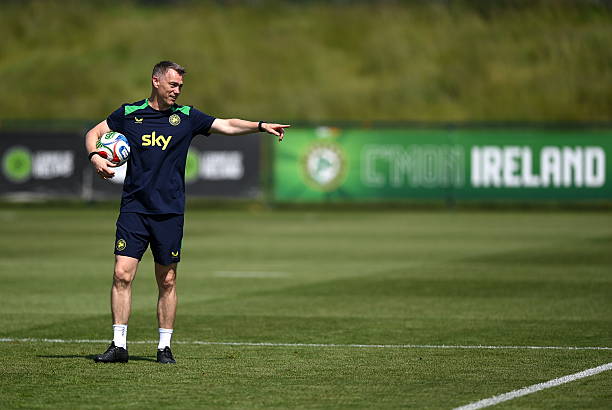
Photo: Getty Images
UEFA has launched a disciplinary investigation following an alleged spitting incident during the heated Nations League meeting between the Republic of Ireland and Israel, adding another layer of controversy to an already politically charged international fixture.
The incident reportedly occurred at half-time of the 1–1 draw in Bačka Topola, Serbia, on October 4, as players and coaching staff made their way towards the dressing rooms.
Damien Doyle, a member of Ireland's backroom staff, was reportedly the target of the alleged incident involving an Israeli player.
UEFA confirmed that official match reports contained an allegation of misconduct in or around the tunnel at half-time. An Ethics and Disciplinary Inspector was appointed to investigate the incident and determine whether further action was warranted.
The allegation has not been established as fact, and the Israeli Football Association has denied that anyone spat towards the Irish coach.
The controversy comes after two tense meetings between the countries, with political tensions surrounding the fixtures extending well beyond the pitch.
Ireland's nominal home match was played behind closed doors in Serbia, rather than in Dublin, amid security and political concerns. The game finished 1–1 after Troy Parrott's first-half penalty was cancelled out by Dor Peretz after the break.
The teams had already met in Hungary the previous week, when Ireland recorded a 3–0 victory in another fixture surrounded by controversy.
Ireland manager Heimir Hallgrímsson subsequently called on UEFA to avoid drawing the two nations together in future competitions, citing the difficult circumstances surrounding the matches.
The Football Association of Ireland has also raised concerns about the wider experience of the double-header with UEFA, while separate allegations relating to the fixtures have added to the scrutiny.
The investigation now places the focus on UEFA and whether the available reports and evidence support disciplinary action against any individual.
Beyond the immediate allegation, the episode highlights the difficulties football authorities face when political tensions spill into international competition.
UEFA must determine what happened during the half-time confrontation, while ensuring that any disciplinary decision is based on evidence rather than the broader political arguments surrounding the fixture.
For now, the investigation remains ongoing, and any potential sanctions will depend on its findings.
Comments (0)
Sign in to comment, like or dislike.
Loading…