
Todd Boehly Leaves Chelsea: How Will His Tenure Be Remembered?
A unique era comes to an end for Chelsea
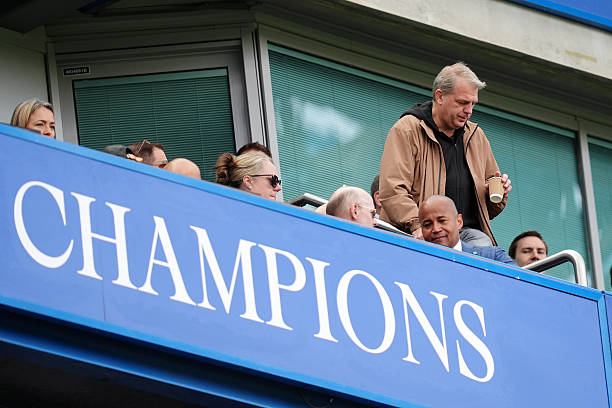
Photo: Getty Images
Todd Boehly's time at Chelsea has come to an end, bringing one of the most extraordinary and controversial ownership periods in modern football to a close.
Boehly and Mark Walter have sold their combined stake in Chelsea to Clearlake Capital, leaving Clearlake as the club's sole owner. The move also brings an end to Boehly's time as Chelsea chairman after just over four years at the helm.
But while Boehly is leaving, the project he helped establish is not. Clearlake was already the majority shareholder in Chelsea, and the club's existing strategy of investing heavily in young players, developing talent and generating significant income from player sales is expected to continue.
That makes Boehly's departure less of a complete change of direction and more the conclusion of the first chapter of Chelsea's post-Abramovich era.
When Boehly's consortium completed the purchase of Chelsea from Roman Abramovich in 2022, few could have predicted what followed.
Chelsea embarked on one of the most aggressive spending periods football has ever seen.
More than £1.5 billion was spent on players during the first years of the new ownership, with Chelsea targeting some of the world's most highly rated young players.
Enzo Fernandez arrived from Benfica for around £107 million, while Mykhailo Mudryk cost around £88.5 million. Moises Caicedo, Wesley Fofana, Marc Cucurella, Christopher Nkunku, Raheem Sterling and a host of other players followed. The strategy was unlike the Chelsea of the Abramovich era.
Rather than primarily purchasing established stars, the new ownership focused heavily on young players with significant potential. Chelsea also became famous for handing players extraordinarily long contracts, with deals of seven or eight years becoming commonplace.
The theory was simple: sign young players, spread the cost of their transfers across long contracts, develop them and build a team capable of competing for years.
Chelsea's first season under the new ownership was disastrous by the club's traditional standards.
Thomas Tuchel was dismissed early in the campaign, Graham Potter was appointed before eventually being sacked himself, and Frank Lampard returned as caretaker manager.
Chelsea finished 12th in the Premier League and scored just 38 goals.
All of this came despite the club spending hundreds of millions of pounds on new players.
The sheer scale of the spending, combined with the poor results and constant changes in the dugout, led to intense criticism of the new ownership.
It also became increasingly apparent that Boehly's initial involvement in football operations was giving way to a more traditional sporting-director structure.
Chelsea began building a large recruitment and sporting department, with the emphasis moving away from the chairman personally overseeing football matters.
Mauricio Pochettino eventually provided some stability. Chelsea finished sixth in the Premier League during the 2023/24 season and reached both the League Cup final and FA Cup semi-finals.
More importantly, Cole Palmer emerged as one of the most important young players in world football.
Chelsea finished the season strongly, winning their final five Premier League games, and appeared to be moving in the right direction. But then Pochettino was surprisingly dismissed at the end of the season.
It became another defining moment of the Boehly era: even when performances appeared to be improving, Chelsea remained willing to make major changes.
For all the criticism directed at the ownership, Chelsea eventually began producing silverware.
Under Enzo Maresca, Chelsea finished fourth in the Premier League in 2024/25, securing Champions League qualification.
They also won the UEFA Conference League, defeating Real Betis 4-1 in the final.
That victory gave Chelsea a unique place in European football history, with the club becoming the first to win all five major UEFA men's club competitions.
Then came an even bigger achievement. Chelsea won the FIFA Club World Cup, defeating PSG 3-0 in the final. Suddenly, the narrative surrounding the ownership had shifted.
The club that had spent billions and endured managerial chaos had trophies to show for its enormous investment.
Despite those achievements, Chelsea's league performances remained inconsistent.
The club's fourth-place finish in 2024/25 was a significant improvement on the 12th-place finish two seasons earlier, but Chelsea subsequently struggled again.
The constant rebuilding of the squad continued, while another managerial change followed. That is perhaps the biggest criticism of the Boehly era.
Chelsea spent enormous sums attempting to construct a team for the future, yet the club continually appeared to be rebuilding rather than progressing along a clearly defined path.
The sheer number of players arriving and departing made it difficult to establish a settled squad.
Chelsea's spending is only one part of the financial story. The new ownership also transformed the club into one of the most aggressive player-trading operations in European football.
The club invested heavily in young players and subsequently generated significant revenue through player sales.
That model became increasingly important as Chelsea attempted to operate within the Premier League's Profit and Sustainability Rules. However, the financial picture remained complicated.
Chelsea recorded a pre-tax loss of £262.4 million for the 2024/25 financial year — reportedly the largest pre-tax loss in Premier League history.
The club also faced UEFA sanctions relating to financial regulations, including fines connected to football earnings and squad-cost rules.
Chelsea's financial strategy therefore became one of the most closely watched aspects of the Boehly era.
The ownership had demonstrated a willingness to spend at a level rarely seen in football, while simultaneously relying heavily on player sales and financial structuring to maintain compliance with regulations.
Another major issue left unresolved is the home of Chelsea: Stamford Bridge.
Chelsea's stadium is one of the most famous grounds in English football, but its capacity leaves the club at a commercial disadvantage compared with several of its biggest domestic rivals.
The ownership explored various possibilities for Stamford Bridge and potential redevelopment, but Boehly's tenure ended without a new stadium being delivered.
For an ownership group that has spent so heavily on the football operation, the lack of a definitive long-term stadium solution remains one of the biggest pieces of unfinished business.
The Boehly era was not solely about the men's first team.
Chelsea's women's team continued to enjoy enormous success, while significant investment was also made in the academy, training facilities and wider football infrastructure.
The club's ability to develop and sell young players became increasingly important to its financial model.
Chelsea's academy in particular became an important source of both first-team talent and transfer revenue.
The ownership's investment therefore extended beyond simply buying players for the men's first team.
So how will the Boehly era be remembered?
On one hand, Boehly leaves behind an extraordinary amount of spending, managerial instability, financial controversy and a squad that has been repeatedly rebuilt.
Chelsea's Premier League performances during the period were nowhere near the consistency the club enjoyed under Abramovich.
On the other hand, Chelsea won the Conference League, won the Club World Cup, returned to the Champions League and developed players such as Cole Palmer into global stars.
The club also underwent a fundamental transformation in the way it recruits, develops and trades players.
Perhaps the most accurate description is that Boehly's Chelsea was an enormous experiment.
The ownership attempted to build a young squad for the long term, spend at a scale rarely seen before, revolutionise the club's recruitment structure and turn player trading into a central component of its business model.
At times it looked visionary. At other times it looked chaotic.
And after four years, it is still too early to know which description will ultimately define it.
Boehly leaves Chelsea without having restored the club to the position it occupied during much of the Abramovich era.
For now, one thing is certain, Todd Boehly changed Chelsea.
Whether he changed them for the better is a question that will only be answered by what happens next.
Comments (0)
Sign in to comment, like or dislike.
Loading…