
The Argentina Scandal! FIFA in a Credibility CRISIS; Full Saga Explained
The Argentina football scandal explained: how the FIFA credibility crisis unfolded, what it means for the World Cup, and the full saga in order.
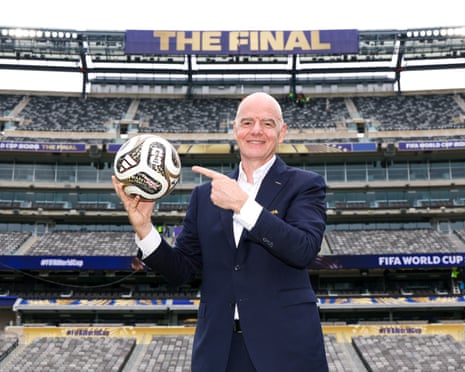
Photo: Dustin Satloff/Fifa/Getty Images
Argentina entered the 2026 FIFA World Cup attempting to defend their crown. Instead, as the tournament reaches its decisive stages, their campaign has become surrounded by controversy, allegations and questions that extend far beyond what has happened on the pitch so far this tournament.
At the centre of the storm are several separate but increasingly intertwined stories.
Firstly, there is reported FBI scrutiny of financial operations connected to the Argentine Football Association, there's explosive refereeing accusations from Argentina’s opponents, there's renewed questions surrounding former international Alejandro “Papu” Gomez’s doping case, and a broader crisis of trust surrounding FIFA.
There is no proven evidence that these controversies are connected. There is also no established evidence that FIFA has manipulated matches to help Argentina or participated in a coordinated cover-up. However the allegations are accumulating.
And with Argentina now deep into another World Cup, the questions are becoming increasingly difficult to ignore.
The FBI Investigation Hanging Over Argentine Football
The most serious off-field development concerns reports that the FBI is examining financial operations connected to the AFA.
According to reports, investigators are scrutinising how more than $300 million connected to the Argentine federation was moved through banks and companies in the United States.
The investigation has reportedly raised questions about possible money laundering and other financial irregularities.
An investigation does not establish guilt, and the existence of scrutiny surrounding the AFA does not mean Argentina’s players or coaching staff are implicated. Despite this, the timing could hardly be more explosive, or at a more controversial time.
While Lionel Messi and Argentina chase another World Cup, the organisation responsible for running Argentine football is facing serious questions away from the pitch. For critics, another question has followed: why has one of the tournament’s biggest off-field stories not completely dominated the World Cup conversation?
The Papu Gomez Case Returns to the Spotlight
Another controversy now being dragged back into the discussion involves Argentina’s 2022 World Cup winner Alejandro “Papu” Gomez.
Gomez tested positive for the banned substance terbutaline in a sample collected while he was playing for Sevilla in October 2022, which was shortly before the World Cup in Qatar.
He nevertheless travelled to the tournament and appeared twice as Argentina went on to become world champions.
The positive test did not become a major global story until 2023, when Gomez was handed a two-year suspension.
That timeline has now fuelled renewed allegations online that football authorities knew about the positive test during Argentina’s World Cup campaign and covered the story up to allow Gomez to continue participating while the case remained unresolved.
Some of the most serious claims go further, alleging that FIFA and the AFA actively worked together to cover up the case.
There is an important distinction between a doping case taking months to move through testing, notification, disciplinary and appeals procedures and evidence of a deliberate cover-up. At present, the publicly established facts are that Gomez’s sample was collected before the 2022 World Cup, that he played at the tournament and that his two-year ban was announced in 2023.
But the timing inevitably raises even more questions.
When exactly were Gomez, his club, the AFA and the relevant football authorities informed of the positive result? Who knew what, and when? Why was a player who had returned a positive sample able to participate at the World Cup?
Until those questions are answered with a clear and transparent timeline, allegations of a cover-up will continue to circulate.
Egypt, Among Others Said They Were “Cheated”
The controversy surrounding Argentina intensified dramatically after their extraordinary 3-2 victory over Egypt in the Round of 16.
Egypt led 2-0 before Argentina completed a remarkable comeback, but the match was overshadowed by refereeing and VAR controversy.
A potential Egyptian goal was disallowed following VAR intervention, while Egypt were also furious after a late penalty appeal involving Mohamed Salah was rejected shortly before Argentina scored the winner.
Egypt coach Hossam Hassan did not hide his anger. He said his team had been “cheated” and suggested that officials may have wanted the defending world champions, and specifically Lionel Messi to remain in the competition.
The Egyptian Football Association also publicly questioned the fairness and consistency of the officiating. These were no longer simply angry supporters posting conspiracy theories online.
A national-team coach and football association were openly questioning the integrity of decisions made in a World Cup knockout match.
FIFA’s refereeing leadership subsequently defended the officials and rejected accusations against referees as dangerous and baseless.
That response may explain individual decisions, but is yet to end the controversy.
Then Came Switzerland
If FIFA hoped the Argentina controversy would disappear after the Egypt match, the quarter-final only intensified the debate.
Argentina defeated Switzerland 3-1 after extra time, but once again the officiating became a major part of the story.
Swiss players publicly criticised what they believed was one-sided refereeing, while decisions during the match generated another wave of accusations that Argentina were receiving favourable treatment.
Manuel Akanji and Granit Xhaka were among those reported to have expressed frustration with the officiating, while the controversy quickly spread beyond Switzerland.
By the time Argentina reached the semi-finals, supporters of their next opponent were already openly discussing fears that the match could be influenced by refereeing.
Again, controversial decisions are not proof of corruption. But the pattern is becoming the story. One controversial match can be dismissed as football. Two consecutive knockout matches ending with opponents publicly questioning the officiating creates a much bigger problem. Accusations of robberies have also been made by a number of players such as Erling Haaland. Although it doesn't involve Argentina, it speaks to the feeling among professionals about how refereeing and FIFA is operating through their eyes.
The Messi Factor
Then there is the issue nobody can ignore: Lionel Messi.
Messi remains one of the biggest attractions in world sport. At 39, this World Cup is likely to be the final chapter of his international career. A deep Argentina run is commercially enormous for the tournament. That does not prove FIFA is helping Argentina, but it explains why every controversial decision is being viewed through a lens of suspicion given FIFA's history of corruption, and the influence of money in sport.
Egypt’s coach effectively raised the question himself: did officials want Messi and the defending champions to remain in the tournament?
For many supporters, the concern is not based on one decision. It is based on the accumulation of controversies surrounding the same team at the same time, over a number of major tournaments.
The financial investigation, the renewed Papu Gomez questions, the Egypt and Switzerland controversy, the player/coaches comments, and the enormous commercial value of keeping Messi at the centre of the World Cup; all Individually, doesn't proves a conspiracy, but together, they have created a credibility crisis.
A Wider FIFA Crisis Makes the Allegations Even More Explosive
The Argentina controversy is also unfolding during a World Cup in which FIFA itself is facing broader questions over governance, refereeing and outside influence.
European politicians have reportedly pushed for scrutiny of FIFA president Gianni Infantino following controversy over the handling of disciplinary decisions elsewhere in the tournament.
That wider backdrop and context matters. When FIFA is already facing questions about transparency and influence, supporters are far less likely to simply accept assurances that every controversial decision is isolated and everything is operating exactly as it should, especially considering the many controversies associated with FIFA over the years.
This does not prove Argentina are being protected, but it explains why the allegations have gained so much traction.
Is There Actually Evidence of a Cover-Up?
This is the most important distinction in the entire story. There are established facts, and their are unsubstantiated allegations, and online chat.
The AFA is reportedly facing FBI scrutiny over major financial operations. Papu Gomez returned a positive doping sample before the 2022 World Cup and was later banned for two years. Egypt’s coach publicly said his team had been “cheated” after losing to Argentina. The Egyptian FA questioned the fairness of the officiating. Swiss players subsequently criticised the refereeing following their defeat to Argentina.
Those things happened.Then there are allegations.
That FIFA and the AFA deliberately concealed Gomez’s doping case. That FIFA is suppressing or minimising the financial scandal surrounding Argentine football. That referees are deliberately helping Argentina. That the tournament is being manipulated to give Messi one final World Cup run. Those claims have not been proven.
That distinction must remain clear.
But dismissing every question as a conspiracy theory would also be inadequate. When serious allegations arise, transparency is the only answer.
FIFA needs to publish the timelines, explain the processes, explain the major VAR decisions, clarify who knew about oómez’s positive test and when, and Allow the reported financial investigation to proceed without interference.
The more information that remains unclear, the more speculation will fill the gap.
Argentina’s Greatest Opponent May Now Be Suspicion
Argentina may go on to win the World Cup. They may also be completely innocent of every allegation of preferential treatment surrounding their campaign.
The players themselves cannot be held responsible for every controversy involving the AFA, FIFA or individual refereeing decisions.
But the cloud surrounding their tournament is now impossible to ignore.
A reported FBI investigation involving hundreds of millions of dollars, a pre-2022 World Cup doping case now being used to fuel allegations of a cover-up, two consecutive knockout opponents furious with the officiating, a national-team coach openly suggesting officials wanted Messi to remain in the tournament, and a governing body already struggling with a crisis of trust.
None of it, on its own or collectively, proves that the World Cup is fixed, none of it proves that FIFA is protecting Argentina, none of it proves a coordinated cover-up.
But there are now enough legitimate questions that simply dismissing the entire controversy will not make it disappear and the relevant people/parties need to clarify and establish the facts to ease the minds of everyone in the football community.
Argentina are still chasing history. But alongside every goal, every victory and every moment of Messi magic, another story is following them through this World Cup.
The story of suspicion.
And until football’s authorities provide clear, transparent answers, that story is not going away.
Comments (0)
Sign in to comment, like or dislike.
Loading…