
Senegal Are African Champions Again – The Full Story Of Their 2025 AFCON Win
After an extraordinary legal battle with Morocco, the Lions of Teranga have officially reclaimed their place at the summit of African football
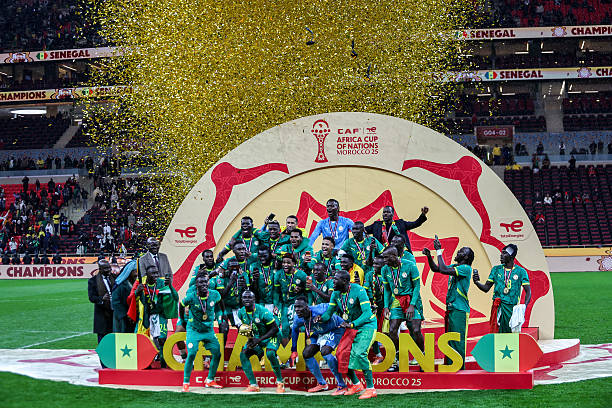
Photo: Getty Images
From decades of disappointment to continental glory, Senegal's journey to becoming two-time Africa Cup of Nations champions has been anything but straightforward.
After an extraordinary legal battle with Morocco, the Lions of Teranga have officially reclaimed their place at the summit of African football.
Senegal are officially the champions of Africa. Again. But this time, the celebrations come with a story unlike anything the Africa Cup of Nations has witnessed before.
On 24 November 2026, the Court of Arbitration for Sport overturned the Confederation of African Football's controversial decision to strip Senegal of their 2025 Africa Cup of Nations title and award it to Morocco.
The ruling restored Senegal's original 1-0 victory in the final, played in Rabat on 18 January 2026, confirming the Lions of Teranga as two-time continental champions.
It was the conclusion of an extraordinary 10-month saga involving a dramatic final, a controversial penalty, a temporary walk-off, disciplinary proceedings and an international sporting arbitration case.
Yet, to understand just how significant this latest achievement is, it is important to look at the journey that brought Senegal here.
THE EARLY YEARS: A LONG ROAD TO AFRICAN FOOTBALL'S ELITE
Senegal first appeared at the Africa Cup of Nations in 1965, just five years after gaining independence from France.
Their debut tournament, held in Tunisia, immediately demonstrated their potential. Senegal reached the semi-finals and eventually finished fourth, establishing themselves as a competitive emerging force in African football.
However, consistency at the highest level proved difficult. Their next appearance came in 1968, before a lengthy absence from the tournament.
They returned in 1986 and gradually began establishing themselves as regular participants.
The 1990 tournament in Algeria provided another encouraging moment, with Senegal reaching the semi-finals before finishing fourth.
They also reached the quarter-finals in 1992, 1994 and 2000, but a place in the final continued to elude them. That would change in 2002.
2002: THE FIRST FINAL AND HEARTBREAK AGAINST CAMEROON
The 2002 Africa Cup of Nations in Mali represented a defining moment in Senegalese football history.
Led by a talented generation featuring El-Hadji Diouf, Khalilou Fadiga, Henri Camara and Aliou Cissé, Senegal produced an outstanding tournament.
They defeated Nigeria 2-1 after extra time in the semi-finals to book their place in their first-ever AFCON final.
Standing between them and continental glory were defending champions Cameroon.
After 120 minutes, the match remained goalless, forcing a penalty shootout.
Unfortunately for Senegal, the shootout ended in heartbreak. Cameroon prevailed 3-2, leaving the Lions of Teranga agonisingly close to their first continental crown.
It was a particularly painful experience for Aliou Cissé, who missed his penalty in the shootout.
Nevertheless, the 2002 generation had established Senegal as a genuine African powerhouse.
Later that year, many of the same players would make further history by reaching the quarter-finals of the FIFA World Cup, including their famous opening-match victory over reigning world champions France.
THE YEARS OF FRUSTRATION
Senegal continued to feature regularly at the Africa Cup of Nations, but another final appearance proved difficult to achieve.
They reached the semi-finals in 2006, finishing fourth after losing to eventual champions Egypt.
The following years brought further disappointment, including group-stage eliminations in 2008, 2012 and 2015.
There were encouraging signs in 2017, when Senegal reached the quarter-finals, but the breakthrough was still missing. Then came 2019.
Senegal entered the 2019 AFCON in Egypt with genuine ambitions of finally winning their first continental championship.
With Aliou Cissé now in charge, the team featured a new generation of stars, including Sadio Mané, Kalidou Koulibaly and Idrissa Gana Gueye.
They navigated their way through the tournament, defeating Tunisia after extra time in the semi-finals to reach their second AFCON final.
Their opponents were Algeria. Unfortunately, Senegal's wait for a first title continued.
An early goal from Baghdad Bounedjah proved decisive, with Algeria winning 1-0 and leaving Senegal runners-up for a second time.
For Mané and his teammates, it was another painful setback. However, the foundations were being laid for something special.
2021: SENEGAL FINALLY BECOME AFRICAN CHAMPIONS
Senegal's breakthrough finally arrived at the 2021 Africa Cup of Nations, hosted by Cameroon and played in January and February 2022 after being postponed.
Having reached the final in 2019, Senegal entered the tournament as one of the favourites.
They delivered throughout the competition, eventually reaching the final against Egypt.
The contest brought together two of Africa's biggest footballing nations and two of its biggest stars: Sadio Mané and Mohamed Salah.
After 120 minutes without a goal, the championship would once again be decided by penalties. This time, however, Senegal would have a different ending.
Mané converted the decisive penalty to secure a 4-2 shootout victory, giving Senegal their first-ever Africa Cup of Nations title.
After decades of disappointment, the Lions of Teranga were finally champions. Mané was named Player of the Tournament, while goalkeeper Edouard Mendy also played a crucial role in their success.
For captain Aliou Cissé, who had experienced the heartbreak of the 2002 final as a player, the achievement was particularly significant.
Twenty years after missing a penalty against Cameroon, Cissé had now led his country to the summit of African football as head coach.
It was a remarkable full-circle moment.
2023: THE DEFENDING CHAMPIONS FALL
Senegal entered the 2023 AFCON in Ivory Coast as defending champions, hoping to become the first team since Egypt's famous three consecutive titles between 2006 and 2010 to win back-to-back tournaments.
They started impressively, winning all three group matches and establishing themselves as one of the competition's strongest sides.
However, their campaign ended in the Round of 16. After a 1-1 draw with hosts Ivory Coast, Senegal were eliminated on penalties, losing 5-4 in the shootout.
It was a disappointing end to their title defence, but the squad remained one of the most talented in African football.
2025: THE ROAD TO A SECOND AFRICAN CROWN
The 2025 Africa Cup of Nations in Morocco presented Senegal with another opportunity to reclaim their continental crown.
Under head coach Pape Thiaw, who had taken charge in 2024, Senegal arrived with an experienced squad featuring Sadio Mané, Kalidou Koulibaly, Edouard Mendy and Idrissa Gana Gueye, alongside emerging talents such as Lamine Camara and Iliman Ndiaye.
They progressed through the group stage with victories over Botswana and Benin, alongside a draw against DR Congo.
Their knockout campaign continued with victories over Sudan, Mali and Egypt, securing their place in a third final in four editions. Standing in their way were tournament hosts Morocco.
The final, played in Rabat on 18 January 2026, would become one of the most controversial matches in African football history.
For much of the final, the two sides battled in a tense and closely contested encounter.
Morocco were chasing their first AFCON title since 1976, while Senegal were looking to secure their second championship.
Neither side could find a breakthrough during normal time. Then came the incident that would change the entire story of the tournament.
Deep into stoppage time, referee Jean-Jacques Ngambo Ndala awarded Morocco a penalty following a VAR review.
The decision sparked furious protests from the Senegalese players and coaching staff.
Head coach Pape Thiaw instructed his players to leave the pitch, resulting in a temporary suspension of the match.
Senegal's players remained away from the field for approximately 14 minutes before eventually returning.
When play resumed, Morocco had the opportunity to win the championship from the penalty spot.
Brahim Díaz stepped forward, but his attempted Panenka penalty was saved by Edouard Mendy.
The match proceeded into extra time, and Senegal took full advantage of their reprieve.
Just three minutes into extra time, Pape Gueye produced a stunning left-footed strike to give Senegal the lead.
The goal came following excellent work involving Sadio Mané and Idrissa Gana Gueye, with Pape Gueye finishing the move from the edge of the penalty area.
Morocco pushed for an equaliser, but Senegal held on. The final whistle confirmed a 1-0 victory after extra time. Senegal had won their second Africa Cup of Nations.
Pape Gueye was named Man of the Match, while the celebrations began for a team that had once again reached the summit of African football.
But the story was far from over.
On 17 March 2026, almost two months after the final, the Confederation of African Football's Appeals Board delivered a stunning decision.
CAF overturned the original result and declared Senegal to have forfeited the final because of their players' temporary departure from the pitch.
Morocco were consequently awarded a 3-0 victory and recognised as the 2025 AFCON champions.
The decision sparked enormous debate across international football. The central argument concerned the application of the AFCON regulations, particularly the rules governing a team refusing to continue playing.
Senegal's Football Federation strongly contested the decision and launched an appeal at the Court of Arbitration for Sport.
The dispute was no longer simply about what had happened on the pitch. It had become a major legal battle over the interpretation of football regulations and the authority of match officials.
24 NOVEMBER 2026: SENEGAL RECLAIM THEIR CROWN
The final chapter arrived on 24 November 2026. The Court of Arbitration for Sport unanimously upheld Senegal's appeal, setting aside CAF's Appeals Board decision and restoring the original disciplinary decision.
In doing so, CAS confirmed the result of the final: Senegal 1-0 Morocco after extra time.
A key part of the ruling concerned the referee's authority to decide whether the match could resume.
CAS concluded that the referee had the sole authority to make that decision and that his decision to restart the game could not be overturned through the regulations concerning a permanently abandoned match.
Both teams had eventually returned to the pitch and expressed their willingness to continue. The court therefore ruled in Senegal's favour.
The decision meant that Morocco's 3-0 administrative victory was overturned and Senegal were officially restored as the 2025 Africa Cup of Nations champions.
It was an extraordinary development, particularly considering that the country had already been stripped of the trophy and spent months fighting to have the original result reinstated.
However, there may still be another chapter. On the same day as the ruling, the Moroccan Football Federation announced that it intended to pursue further legal action, raising concerns about the integrity of the arbitration proceedings and alleging communication between one of the arbitrators and Senegal's football federation president.
Senegal's federation denied that the alleged conversation had taken place.
Any further challenge would face the limited grounds available for challenging a CAS decision at the Swiss Federal Supreme Court.
For now, however, the ruling stands: Senegal are the champions.
Comments (0)
Sign in to comment, like or dislike.
Loading…