
Lionel Messi Retires From International Football: The Full Story of the Greatest to Ever Play
The games greatest calls time on his international career.
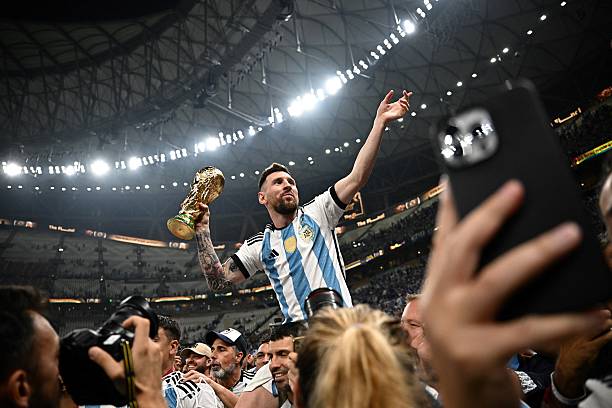
Photo: Getty Images
Lionel Messi has officially retired from international football, bringing an end to one of the greatest and most extraordinary careers in the history of the game.
After more than two decades representing Argentina, Messi leaves the national team as its all-time appearance holder and record goalscorer. His journey included crushing defeats, four major final losses in his early years, a brief retirement in 2016, and one of the greatest redemption stories football has ever seen.
By the time he played his final match, Messi had won the World Cup, two Copa America titles, the Finalissima, Olympic gold and the FIFA U-20 World Cup.
The boy once questioned for whether he could replicate his Barcelona brilliance for Argentina ultimately became the player who delivered his country its greatest modern era.
Lionel Messi's Argentina career in numbers
- 207 appearances
- 125 goals
- 68 assists
- Argentina's all-time leading appearance maker
- Argentina's all-time leading goalscorer
- Appeared at Six FIFA World Cups
- Three World Cup finals
- One FIFA World Cup
- Two Copa America titles
- One Finalissima
- One Olympic gold medal
- One FIFA U-20 World Cup
Messi's final appearance came in the*2026 FIFA World Cup final, where Argentina were beaten 1-0 by Spain after extra time. He retires at the age of 39, ending a senior international career that began in 2005.
The beginning: a difficult international start
Messi's relationship with the Argentina national team was never straightforward.
Born in Rosario, Argentina, Messi moved to Spain as a teenager to join Barcelona's famous La Masia academy. As his reputation grew, questions were raised about his international future, with Spain theoretically able to pursue the young star.
Messi ultimately chose Argentina. He had already represented the country at youth level before making his senior debut against Hungary in August 2005. It was a chaotic start.
Messi was sent off shortly after entering the match, receiving a red card on his senior debut.
Fortunately for Argentina, that moment would become little more than a strange footnote in a career that would transform him into the country's greatest-ever international footballer.
The first trophy: FIFA U-20 World Cup glory
Before conquering the senior game, Messi announced himself as an international superstar at the 2005 FIFA U-20 World Cup.
Messi led Argentina to the title and finished the tournament as one of its standout players. It was the first major sign of what was to come.
While senior international success would take much longer, Messi had already demonstrated that he could be the centrepiece of a winning Argentina side.
Argentina's footballing future appeared to be in safe hands.
The 2006 World Cup: Messi arrives on the global stage
At just 18 years old, Messi was selected for Argentina's squad at the 2006 FIFA World Cup in Germany.
The tournament included one of the earliest iconic moments of his international career with Messi scoring his first World Cup goal during Argentina's famous 6-0 victory over Serbia and Montenegro.
Argentina reached the quarter-finals before being eliminated by hosts Germany on penalties.
For Messi, however, the tournament represented the beginning of a remarkable World Cup journey that would eventually span six tournaments.
Copa America heartbreak begins
Argentina reached the 2007 Copa America final, where Messi's side were beaten by Brazil.
It was the beginning of a painful pattern. For much of Messi's career, individual brilliance was never enough to bring Argentina the trophies that many believed his talent deserved.
He was regularly compared to Diego Maradona, and critics questioned whether Messi could ever lead his country to the ultimate international prize. Those questions would follow him for years.
Olympic gold in Beijing
In 2008, Messi helped Argentina win the Olympic gold medal at the Beijing Games.
It was another important international achievement, with Argentina defeating Nigeria in the final.
While Olympic football is not regarded in the same way as the World Cup or Copa America, the gold medal gave Messi another major achievement and demonstrated his ability to deliver for his country.
World Cup disappointment in 2010
Argentina entered the 2010 FIFA World Cup with Diego Maradona as manager.
Messi was one of the biggest stars in world football and carried enormous expectations. Argentina reached the quarter-finals, where they were heavily beaten 4-0 by Germany.
The result was one of the lowest moments of Messi's World Cup career.
The comparisons with Maradona continued, and Messi's lack of a senior international trophy remained a major topic of discussion.
The 2014 World Cup: one step away
The 2014 FIFA World Cup in Brazil changed Messi's international reputation.
Argentina reached their first World Cup final since 1990, with Messi playing a central role throughout the tournament.
Argentina defeated Bosnia and Herzegovina, Iran, Nigeria, Switzerland, Belgium and the Netherlands on their way to the final.
Messi produced some of the tournament's defining performances and carried Argentina's attacking hopes.
But in the final, Argentina faced Germany. After a tense match, Mario Gotze scored in extra time to give Germany a 1-0 victory.
Messi had come closer than ever before.
He won the Golden Ball as the tournament's best player, but the image of Messi walking past the World Cup trophy became one of the defining moments of his career. The greatest prize in football remained out of reach.
Three finals and the breaking point
The heartbreak did not end in Brazil; Argentina reached the 2015 Copa America final, where they were beaten by Chile on penalties.
One year later, history repeated itself. Argentina reached the 2016 Copa America Centenario final and once again faced Chile.
Once again, Argentina lost on penalties. For Messi, it was devastating. Argentina had lost four major finals during his era:
- 2007 Copa America
- 2014 FIFA World Cup
- 2015 Copa America
- 2016 Copa America Centenario
Following the 2016 defeat, Messi announced his retirement from international football.
At the time, it appeared that his Argentina career could be over without a senior international trophy. But Messi returned.
His comeback became the beginning of one of the greatest redemption stories in sporting history.
Copa America 2021: finally, a champion
After years of criticism, disappointment and questions about his international legacy, Messi finally won his first major senior trophy with Argentina at the 2021 Copa America.
Argentina reached the final against Brazil with Angel Di Maria scoring the decisive goal as Argentina won 1-0.
The scenes after the final were unforgettable. Messi finally had the major international trophy that had escaped him for so long.
He finished the tournament as one of its leading figures and was named the competition's best player.
For Argentina, the victory ended a major trophy drought. For Messi, it changed everything with the pressure surrounding his international legacy finally lifted.
Finalissima glory
Argentina's momentum continued in 2022.
Messi helped Argentina defeat Italy 3-0 in the Finalissima, the match between the champions of South America and Europe.
Argentina dominated the match, and Messi was once again at the centre of the team's performance.
It was another sign that Argentina had become one of the strongest teams in world football. The biggest challenge, however, was still to come.
Qatar 2022: Messi becomes a World Cup champion
The 2022 FIFA World Cup became the defining tournament of Messi's career.
Argentina's campaign began disastrously. One of the biggest shocks in World Cup history saw Saudi Arabia defeat Argentina 2-1 in their opening match.
For a moment, Argentina's tournament appeared to be in danger. Instead, Messi led one of the greatest recoveries in World Cup history.
Argentina defeated Mexico and Poland to progress from the group stage before overcoming Australia, the Netherlands and Croatia.
Messi delivered several of the greatest moments of the tournament.
His goal against Mexico helped revive Argentina's campaign.
His performance against Croatia included a famous run and assist for Julian Alvarez.
Then came the final. Argentina faced France in one of the greatest World Cup finals ever played.
Messi scored twice as Argentina led, only for Kylian Mbappe to inspire an extraordinary French comeback.
The match finished 3-3 after extra time. Argentina won the penalty shootout.
Messi was finally a World Cup champion, also winning the Golden Ball, becoming the first player to win the award twice.
After everything that had happened throughout his international career, Messi had completed football's ultimate achievement.
Argentina were world champions for the first time since 1986. Messi had finally achieved what generations of Argentine supporters had dreamed of seeing.
Copa America 2024: Argentina do it again
Messi's international success continued at the 2024 Copa America.
Argentina successfully defended their title and confirmed their position as one of the dominant international teams of the era. The victory gave Messi his second Copa America title.
Argentina had now won:
- Copa America 2021
- Finalissima 2022
- FIFA World Cup 2022
- Copa America 2024
For a player once criticised for supposedly failing to deliver for Argentina, the transformation was extraordinary.
Messi had gone from repeated heartbreak to becoming the leader of one of the most successful generations in the country's history.
The 2026 World Cup: the last dance
Despite being 39 years old, Messi remained part of Argentina's plans for the 2026 FIFA World Cup.
Argentina once again reached the final off the back of an extraordinary World Cup for Messi.
Messi's international career had now taken him to an extraordinary three World Cup finals:
- 2014
- 2022
- 2026
Argentina had the opportunity to win back-to-back World Cups. Instead, Spain won the final 1-0 after extra time.
It was a painful ending, but it did not define Messi's international legacy.
His final match was another World Cup final; an extraordinary way for one of the greatest international careers ever to come to an end.
Six World Cups and historic records
Messi's World Cup career was one of the longest and most successful in football history.
He represented Argentina at six World Cups, he played 34 World Cup matches, a record for appearances at the finals.
Across those tournaments, Messi scored 21 World Cup goals, placing him as the greatest scorer in World Cup history.
Messi leaves international football having won virtually every major honour available to an Argentine footballer.
Argentina's greatest-ever goalscorer, retiring as Argentina's record goalscorer with 125 goals in 207 appearances.
Perhaps the most remarkable part of Messi's international story is that it could have ended very differently.
In 2016, following another Copa America final defeat, he announced his retirement.
At that stage, his senior international career was remembered for failure in major finals.
He had not won the Copa America or the World Cup.
There were genuine debates over whether he could ever be considered Argentina's greatest player.
He returned. Five years later, he won the Copa America. One year after that, he won the World Cup, then won another Copa America.
The player who almost walked away from Argentina without a major senior international trophy eventually retired as a World Cup-winning captain and the most successful central figure of a modern Argentine generation.
Comments (0)
Sign in to comment, like or dislike.
Loading…