
Ireland Beat Israel 3-0 After Extraordinary Week of Controversy
One of the most political games in football history saw the Irish prevail with a big win
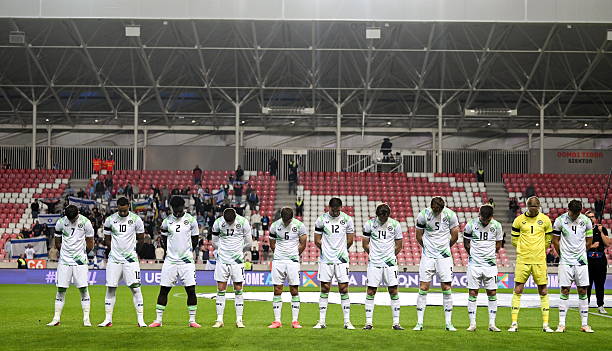
Photo: Getty Images
The Republic of Ireland's extraordinary week ended with a straightforward football result.
Ireland beat Israel 3-0 in their UEFA Nations League meeting in Debrecen, Hungary, scoring all three goals inside the opening 25 minutes. But the scoreline only tells a fraction of the story.
The match had been overshadowed for days by controversy surrounding Ireland's decision to play Israel, protests calling for a boycott and an internal debate within the Irish camp that ultimately required the players to vote on whether they would take the field.
When they finally did, Ireland produced one of their most convincing performances of the international window.
Once the match began, Ireland wasted little time putting the controversy to one side. Troy Parrott opened the scoring in the 14th minute, finishing after excellent work from James Abankwah down the right.
Just two minutes later, Adam Idah doubled Ireland's advantage. Jack Moylan then made it 3-0 in the 25th minute, collecting the ball after Israel failed to clear a Caoimhin Kelleher kick before driving forward and finishing from inside the box.
It was Moylan's fourth goal in as many international appearances, continuing an extraordinary start to his Ireland career.
Israel improved after half-time and created some pressure, but Kelleher made several important saves to preserve Ireland's clean sheet. The result was never seriously in doubt after Ireland's blistering opening.
The game had been at the centre of a major debate in Ireland for months. The Football Association of Ireland had faced calls to boycott the two Nations League fixtures against Israel because of the genocide in Gaza.
More than 160 Irish sportspeople had signed an open letter supporting a boycott, while protests were held in Ireland ahead of the match. The FAI ultimately decided that Ireland would fulfil the fixtures.
The organisation had previously sought UEFA action against Israel, but the request was not accepted. The FAI subsequently confirmed that both matches would be moved away from Ireland, with the October 4 return fixture in Serbia scheduled to be played behind closed doors.
That decision created an uncomfortable situation for the Irish players.
The controversy became even more significant when goalkeeper Gavin Bazunu announced that he would not participate in either match.
Bazunu said his decision was based on his personal belief that taking part was incompatible with his position on the deaths of civilians.
His withdrawal meant Ireland had to make changes to their goalkeeping arrangements, with Jimmy Dunne named as an emergency third goalkeeper.
The squad then held a vote on whether to play the fixture. A significant majority voted to fulfil the match, according to FAI chief executive David Courell.
Manager Heimir Hallgrimsson had described the preceding days as one of the most challenging periods of his coaching career. But once the whistle went, Ireland were completely focused.
The political tension was impossible to ignore. Ireland's players wore black armbands, which the FAI said were in recognition of lives lost in the conflict.
There were no traditional pre-match handshakes or exchange of pennants. During Israel's national anthem, Ireland's players bowed their heads.
The match itself was played in a subdued atmosphere at the Nagyerdei Stadium, with only a small number of supporters present. Irish fans had not been allocated tickets for the fixture because of security concerns.
That created an unusual atmosphere for an international match. Players and coaches could be heard clearly around the largely empty stadium, while the Irish team remained visibly united despite the turmoil surrounding the fixture.
Away from the politics from a purely sporting perspective, the victory was extremely important. Ireland had begun their Nations League campaign with a 1-0 defeat against Kosovo.
The win over Israel moves them onto three points in Group B3 and gives Hallgrimsson's side a much-needed boost. Austria currently lead the group after beating Kosovo 3-1.
The timing is particularly important because Ireland will face Israel again on October 4. That match will be played in Backa Topola, Serbia, behind closed doors.
So the controversy surrounding these fixtures isn't going away. But Ireland have at least ensured that they enter the second meeting with something positive to point towards on the pitch.
The extraordinary circumstances surrounding the fixture will inevitably remain part of the story. But Ireland's players can control only what happens on the pitch. Against Israel, they produced the response they needed.
Three goals in 25 minutes effectively ended the contest before half-time, while Kelleher ensured Israel could not find a way back into it.
For a team that arrived in Hungary after a turbulent week and a disappointing opening defeat, it was exactly the kind of performance Hallgrimsson needed.
The second meeting on October 4 is likely to bring another wave of attention. This time, however, Ireland will arrive knowing they have already beaten Israel convincingly.
After everything that happened before Sunday's match, that may be the most straightforward part of the story.
Comments (0)
Sign in to comment, like or dislike.
Loading…