
Gianni Infantino’s FIFA Future in Doubt as Trump Links, Morocco Allegations and World Cup Power Struggle Intensify
Gianni Infantino: The gift that keeps on giving
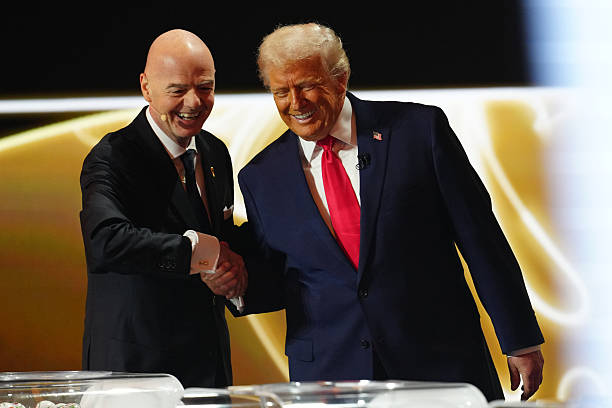
Photo: Getty Images
Gianni Infantino’s grip on FIFA’s presidency is facing its biggest challenge yet, with the Swiss-Italian administrator under pressure following a controversial private investment proposal, accusations of poor governance, and claims that he is using the 2030 World Cup and his relationship with Morocco to secure his political future.
Infantino, who has led FIFA since replacing Sepp Blatter in 2016, has built a reputation for expanding FIFA’s global influence, increasing revenues and strengthening relationships with emerging football nations.
However, critics argue his leadership style has become increasingly centralised, with recent events raising questions over whether FIFA’s president is prioritising his own position, and his own finances over the organisation’s long-term interests.
The Trump connection: FIFA’s increasingly political era
One of the biggest talking points surrounding Infantino has been his increasingly close relationship with United States president Donald Trump.
Infantino has repeatedly appeared alongside Trump at major events, including during preparations around the 2026 World Cup, which was hosted by the United States, Canada and Mexico. Critics have accused the FIFA president of becoming too politically aligned with Trump, arguing that football’s governing body risks moving away from its traditional neutrality.
That relationship became even more controversial when Infantino introduced the FIFA Peace Prize, an award critics claimed appeared closely connected to Trump. Former FIFA officials and commentators questioned whether Infantino was blurring the line between football administration and political influence.
Supporters of Infantino argue that maintaining relationships with powerful political leaders is necessary for FIFA to operate globally, secure investment and organise tournaments. However, opponents believe his approach has made FIFA too dependent on political alliances.
The failed World Cup investment plan that triggered the crisis
The immediate crisis began after Infantino pushed a plan to create a new FIFA commercial entity that would sell a stake in World Cup-related assets to private investors.
The proposal, reportedly involving billions of dollars of investment, was designed to generate additional revenue and increase funding for football development worldwide.
However, it triggered outrage among major football stakeholders, who argued FIFA was attempting to commercialise its most valuable asset without proper consultation of the football community.
UEFA was one of the strongest opponents, with European football leaders warning that the World Cup was not something that should be partially sold to private investors. CONCACAF and the Asian Football Confederation also expressed concerns over the process and lack of transparency.
The backlash became so severe that FIFA eventually apologised to member associations over mistakes made during the process and abandoning the proposal, while senior officials attempted to repair relationships with federations.
Morocco and the 2030 World Cup: a political lifeline?
With Infantino’s position under pressure, attention has turned towards Morocco and the 2030 FIFA World Cup.
Morocco is one of Infantino’s strongest allies within world football and will co-host the 2030 tournament alongside Spain and Portugal, with additional celebrations taking place in Uruguay, Argentina and Paraguay.
Reports have emerged claiming Infantino offered Morocco the 2030 World Cup final as part of efforts to secure political support ahead of his expected re-election campaign. FIFA has denied these allegations, stating that no such agreement exists.
However, the timing has raised eyebrows among critics.
Infantino’s critics argue that awarding additional prestige to Morocco could strengthen his support among African football associations, where FIFA’s president has traditionally enjoyed significant backing. They believe the 2030 tournament has become an important part of Infantino’s strategy to maintain his influence.
Supporters counter that Morocco has invested heavily in football infrastructure and deserves recognition after years of growth, highlighted by its historic run to the 2022 World Cup semi-finals.
Who has publicly criticised Infantino?
Several major figures and organisations have openly challenged Infantino’s leadership.
UEFA
European football’s governing body has been among his biggest critics. UEFA opposed the private investment proposal and reportedly discussed extreme measures, including refusing participation in FIFA competitions if the plan moved forward.
UEFA’s concerns centred around transparency, governance and the fear that FIFA was becoming too commercially driven.
Mark Carney – Canadian Prime Minister
Canadian Prime Minister Mark Carney publicly withdrew his support for Infantino, describing the situation as a major governance failure. His criticism was particularly significant because Canada is one of the hosts of the 2026 World Cup.
Constant Omari – former FIFA Council member
Former FIFA Council member Constant Omari called on Infantino either to resign or face a vote of confidence from FIFA’s 211 member associations. He accused the president of damaging FIFA’s credibility and concentrating too much power around himself.
Football executives and former officials
Former FIFA figures, including critics from previous administrations, have argued that Infantino’s leadership style resembles the power struggles that damaged FIFA during the final years of Sepp Blatter’s presidency.
Which associations still back Infantino?
Despite the criticism, Infantino is far from isolated.
Several football regions continue to support him, particularly associations from Africa, Asia and Oceania. FIFA leadership has insisted that Infantino retains significant backing among member nations, with Morocco remaining one of his strongest allies.
The support comes from several factors:
Increased FIFA funding programmes under Infantino.
Greater influence for smaller football nations.
Expanded World Cup formats, including the move to 48 teams.
Investment into football development projects worldwide.
The current football federations who have publicly supported Infantino are Qatar, Sri Lanka, UAE, Morocco, Egypt, Mauritania, Niger, DR Congo, Lebanon, and Kuwait.
The battle for FIFA’s future
The biggest question now is whether Infantino can survive this latest political storm.
Unlike previous FIFA crises, where corruption investigations directly forced leadership changes, Infantino’s challenge is based around governance, trust and the concentration of power and wealth.
His supporters believe he has transformed FIFA into a stronger global organisation with record revenues and increased investment in developing football nations.
His opponents argue that FIFA has become too centralised around one individual, with decisions being made without enough consultation from member associations.
The upcoming FIFA presidential election will determine whether Infantino’s political strategy has succeeded.
If Morocco and other emerging football regions continue backing him, he may survive one of the biggest challenges of his presidency.
But if opposition continues to grow from the most respected people and organisation, and more associations withdraw support, the man who promised to modernise FIFA could find himself fighting to protect the very position that gave him global power.
Comments (0)
Sign in to comment, like or dislike.
Loading…