
Crystal Palace Mascot Ordeal: PETA Calls for Iconic Eagle Phoenix to Be Retired
A unique tradition could be coming to an end
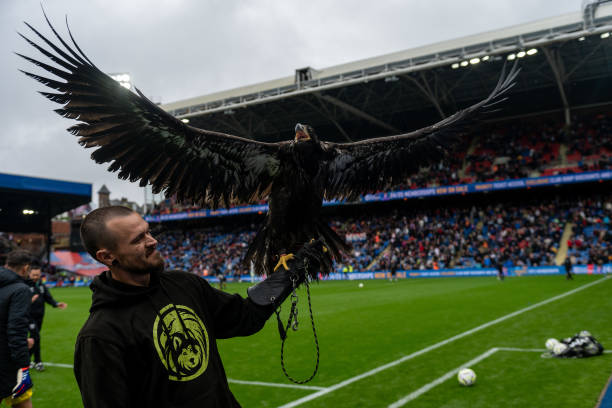
Photo: Getty Images
Crystal Palace have been urged to retire their famous live eagle mascot, Phoenix, after animal rights organisation People for the Ethical Treatment of Animals raised concerns about the bird’s welfare and the potential dangers of bringing wildlife into a football stadium.
PETA has written to Crystal Palace chief executive Sharon Lacey, calling on the Premier League club to end Phoenix’s matchday appearances at Selhurst Park and commit to never using live animal mascots again.
The controversy has reignited debate about whether live animals should be part of football’s matchday entertainment, particularly in environments filled with loud crowds, bright lights and intense noise.
Why Has Crystal Palace’s Eagle Mascot Become Controversial?
Phoenix, an American bald eagle, was introduced to Crystal Palace supporters in August 2024, replacing the club’s previous eagle mascot, Kayla, who died in 2020.
The eagle has become closely associated with Palace’s identity. The club adopted the Eagles nickname in 1973, and the tradition of featuring a live bird at matches began in 2010.
However, PETA believes that bringing an eagle into a football stadium creates unnecessary risks for both the animal and spectators.
The organisation argues that the noise, bright lights and unpredictable atmosphere of a football match can leave birds frightened, disoriented and panicked.
PETA also claims that using eagles for entertainment prevents them from fully engaging in their natural behaviours, potentially causing stress and frustration.
In its letter to Palace, the group called on the club to retire Phoenix permanently and stop using live animal mascots.
Dr Carys Bennett, PETA’s senior corporate projects manager, argued that the club already has a human mascot capable of entertaining supporters without involving a live wild animal.
The Previous Eagle Mascot Was Involved in a Disturbing Incident
The debate has also brought renewed attention to an incident involving Kayla, Crystal Palace’s previous eagle mascot.
In 2015, a Charlton Athletic supporter attempted to punch Kayla during a League Cup fixture at Selhurst Park. The incident highlighted the potential danger that live animal mascots can face in emotionally charged football environments.
PETA has also referred to other incidents involving birds at sporting events, including collisions with walls and windows, as well as a case in which a falcon injured a spectator after landing on his head.
While these incidents do not establish that Phoenix has been harmed, they form part of the animal welfare organisation’s argument that live birds should not be used for stadium entertainment.
Phoenix Has Yet to Make a Full Matchday Return
Despite being introduced to supporters in 2024, Phoenix has not returned to Selhurst Park for another appearance.
Plans for Phoenix to make a maiden flight across the pitch before kick-off were reportedly abandoned during the current season.
The circumstances surrounding those plans have added another layer to the debate, although there has been no confirmation that Phoenix’s absence is directly connected to PETA’s latest campaign.
Phoenix is based at the Eagle Heights Wildlife Foundation in Kent, which prepared the bird for its role as Crystal Palace’s mascot.
PETA’s latest intervention puts pressure on the club to explain how it intends to approach the eagle’s future.
What Has Crystal Palace Said About the Situation?
Crystal Palace had not publicly responded to PETA’s request at the time of reporting.
The club has been contacted for comment, but no official decision to retire Phoenix has been confirmed.
For Palace supporters, the eagle has long been a symbol of the club’s identity. Kayla’s appearances became a familiar part of the atmosphere at Selhurst Park, and Phoenix was introduced to continue that tradition.
However, the controversy raises an important question: should a club’s traditions continue if concerns are being raised about the welfare of the animal involved?
If Palace decides to retire Phoenix from matchday duties, the club could maintain its eagle identity without bringing a live bird into the stadium.
The club already has Pete the Eagle, its human mascot, who can continue engaging with supporters and contributing to the matchday atmosphere.
Palace could also explore additional visual displays, animations or other forms of pre-match entertainment to preserve the tradition without relying on a live animal.
The challenge would be finding a way to respect the club’s history while addressing the concerns raised by animal welfare campaigners.
Other European clubs, including Benfica and Lazio, have also used live eagles as part of their matchday traditions. However, PETA says no other UK football club currently uses a live animal mascot.
Whether Palace decide to retire Phoenix is still unclear at this moment in time.
Comments (0)
Sign in to comment, like or dislike.
Loading…