
Ballon d’Or 2026: Everything You Need to Know
A historic Ballon d'Or awards night awaits!
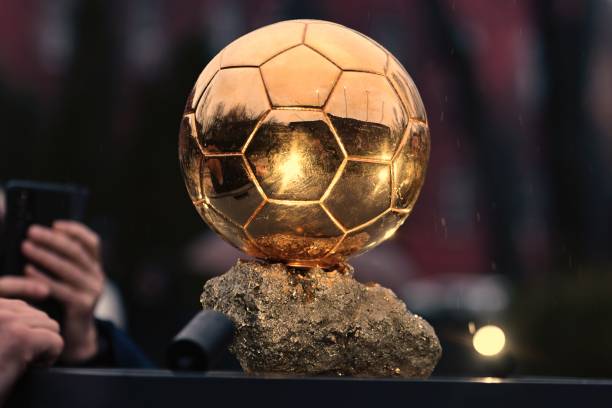
Photo: Getty Images
Harry Kane, Lamine Yamal, Kylian Mbappé and Lionel Messi headline a wide-open race as the Ballon d’Or celebrates its 70th anniversary in London.
The football world will turn its attention to London on Monday night as the 2026 Ballon d’Or ceremony brings together the game’s biggest names to recognise the outstanding performers of the past season.
With the FIFA World Cup also forming part of the period under consideration, performances on the international stage could prove decisive in one of the most fascinating races in recent years.
Harry Kane, Lamine Yamal, Kylian Mbappé, Lionel Messi and defending champion Ousmane Dembélé are among the major names in contention for the men’s award. Meanwhile, the women’s prize features an equally competitive shortlist, with 30 nominees vying for football’s most prestigious individual honour.
When and where is the Ballon d’Or?
The ceremony will take place on Monday, 26 October, at the London Palladium Theatre in London, England. It begins at 20:00 GMT, which is 7:00 am AEDT on Tuesday, 27 October.
The event marks the 70th anniversary of the Ballon d’Or, first awarded in 1956. London’s selection as host city also pays tribute to the inaugural winner, England’s Stanley Matthews.
Football legend Thierry Henry and presenter Kate Scott will host the ceremony. The awards are organised by France Football in partnership with UEFA, with the partnership beginning in 2024.
The leading candidates for the men’s Ballon d’Or
The race features a mix of prolific goalscorers, creative playmakers and players whose seasons were defined by major trophies. Here are seven of the biggest talking points ahead of the ceremony.
Harry Kane — Bayern Munich and England
2025–26 statistics: 73 goals and eight assists.
Kane enters the ceremony with an extraordinary scoring record after helping Bayern Munich win the Bundesliga, DFB-Pokal and DFL-Supercup. His goalscoring consistency and ability to contribute beyond finishing have strengthened his case for the award.
His international campaign also matters. Kane scored six times during England’s run to the World Cup semi-finals, although England’s failure to reach the final could affect how voters assess his overall season.
Kane’s candidacy centres on a simple argument: his individual output has been exceptional, and he has paired it with domestic silverware.
Lamine Yamal — Barcelona and Spain
2025–26 statistics: 26 goals and 21 assists.
Yamal has established himself as one of world football’s most influential young players. The Barcelona winger combined goal contributions with his ability to beat defenders and create opportunities, while helping his club win La Liga and the Spanish Super Cup.
Spain’s World Cup triumph adds another major achievement to his season. However, the debate surrounding Yamal is whether his individual influence at the tournament was enough to put him ahead of more prolific candidates.
A victory would be a landmark achievement for a player who is still in his teens.
Lionel Messi — Inter Miami and Argentina
2025–26 statistics: 44 goals and 30 assists.
Messi’s inclusion in the leading conversation demonstrates that his influence remains significant at 39. He helped Inter Miami win the MLS Cup and collected a second consecutive MLS MVP award.
At the World Cup, Messi scored eight goals and provided four assists as Argentina reached the final. Argentina ultimately missed out on retaining the title, but his individual tournament numbers give voters a substantial body of work to consider.
A ninth Ballon d’Or would extend his own record. His case will depend on how voters weigh his extraordinary output against the different competitive environments in which the leading candidates played.
Kylian Mbappé — Real Madrid and France
2025–26 statistics: 58 goals and 14 assists.
Mbappé once again produced a remarkable scoring season for Real Madrid, despite the club falling short of its biggest trophy ambitions. His speed, finishing and ability to create decisive moments kept him among the most productive forwards in the world.
He also made a major impact at the World Cup, scoring 10 goals and claiming the tournament’s Golden Boot for a second time.
The challenge for Mbappé is the balance between individual brilliance and team success. His personal statistics are among the strongest in the field, but the absence of major club silverware could count against him.
Michael Olise — Bayern Munich and France
2025–26 statistics: 26 goals and 41 assists.
Olise has developed into one of Europe’s most productive creators. His performances helped Bayern win the Bundesliga, DFB-Pokal and DFL-Supercup, and he was named Bundesliga Player of the Season.
His seven assists at the World Cup also underlined his influence for France. Olise’s candidacy is particularly interesting because his case rests not only on goals, but on how frequently he creates scoring opportunities for teammates.
The question is whether that level of creativity can outweigh the lack of a Champions League or World Cup title.
Ousmane Dembélé — Paris Saint-Germain and France
2025–26 statistics: 25 goals and 14 assists.
The defending Ballon d’Or winner remains in the conversation after another trophy-filled campaign with Paris Saint-Germain. PSG won Ligue 1 and the Champions League, alongside other major honours.
Dembélé produced important performances in the Champions League knockout stages and scored six times at the World Cup. Injuries affected parts of his club season, however, and the competition for this year’s prize is particularly strong.
A second consecutive award would be a significant achievement, but he faces a challenge from players with stronger overall scoring totals or particularly influential international campaigns.
Rodri — Manchester City and Spain
2025–26 headline achievement: World Cup winner and tournament Player of the Tournament.
Rodri’s case is built on his influence in midfield rather than a huge goals tally. After a difficult period following his serious knee injury, he returned to prominence during Spain’s World Cup-winning campaign.
His ability to control possession, organise the midfield and influence the rhythm of matches makes him a different kind of contender from the forwards around him. He also collected domestic cup honours during the season.
Rodri previously won the Ballon d’Or in 2024. Another victory would underline the importance voters place on midfield influence and international success.
The women’s Ballon d’Or: Who is in contention?
The women’s award also features 30 nominees, with players from Barcelona, Arsenal, Bayern Munich, Manchester City and other leading clubs represented.
One of the main storylines is a new winner. Aitana Bonmatí won the previous three editions, but she is not among the 2026 nominees. Her absence guarantees that the women’s award will have a different winner this year.
Names to watch include:
Alexia Putellas — the Barcelona and Spain midfielder is a two-time former winner and one of the most decorated players on the shortlist.
Mariona Caldentey — the Arsenal and Spain midfielder brings club and international experience to the race.
Alessia Russo — the Arsenal and England striker is among the leading attacking names nominated.
Ewa Pajor — the Barcelona and Poland forward is another major goalscoring candidate.
Caroline Graham Hansen — the Barcelona and Norway winger offers a strong creative and attacking profile.
Melchie Dumornay — the OL Lyonnes and Haiti attacker is one of the standout young talents in the field.
Barbra Banda — the Orlando Pride and Zambia forward represents one of the leading candidates from outside Europe.
The women’s award will be decided on the same broad principles as the men’s prize: individual performances, decisive contributions, team achievements and sporting conduct.
What other awards will be presented?
The Ballon d’Or ceremony recognises more than the two senior individual winners. The awards scheduled to be presented include:
Men’s and Women’s Ballon d’Or: the main individual honours.
Men’s and Women’s Young Talent of the Year: recognising outstanding young players.
Men’s and Women’s Goalkeeper of the Year: celebrating the leading goalkeepers.
Men’s and Women’s Coach of the Year: recognising coaching achievements.
Men’s and Women’s Club of the Year: honouring the leading teams.
Men’s and Women’s Striker of the Year recognising outstanding goalscoring performances.
Sócrates Award: recognising humanitarian work and social initiatives.
How is the Ballon d’Or decided?
The award is based on individual performance, team achievements and sporting conduct. For the 2026 edition, the World Cup adds another major set of performances for voters to assess alongside club football.
The men’s and women’s awards are voted on by specialist journalists representing the eligible countries under the competition’s rules. The voting system remains overseen by France Football, with UEFA involved in organising the ceremony.
That means the award is not simply a goalscoring competition. Goals and assists matter, but so do performances in decisive matches, consistency across the season, major trophies and the impact a player has on their team.
Comments (0)
Sign in to comment, like or dislike.
Loading…