
The “Red Cartel”, Manchester City and the Case for a Premier League Salary Cap
This Manchester City scandal has re-opened discussion about wealth in the Premier League
30 Sept 2026·9 min read·by Taj Soupidis
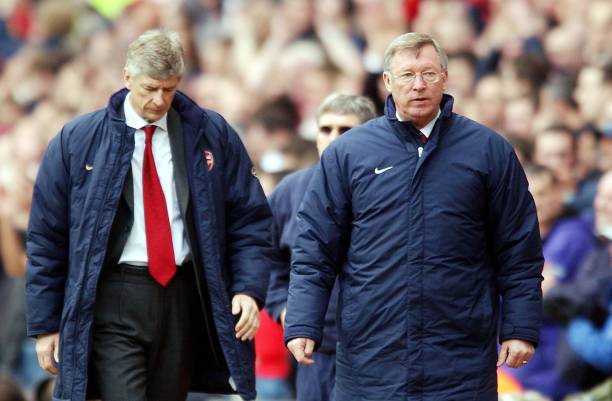
Photo: Getty Images
Manchester City’s financial verdict is about much more than one football club.
It is about whether the Premier League can genuinely call itself the most competitive league in the world when, year after year, the same handful of clubs possess the financial power to dominate the competition.
Perhaps the biggest question now facing English football is a simple one:
Would the Premier League be better off with a salary cap?
Manchester City have just been found guilty by an independent commission of serious breaches of the Premier League’s financial rules covering nine seasons from 2009-10 to 2017-18.
The commission found that City used “sham” commercial contracts to artificially inflate revenues and reduce costs by more than £900 million, filed misstated accounts and significantly breached both Premier League and UEFA spending limits. Three of four alleged failures to cooperate with the Premier League investigation were also upheld.
City deny wrongdoing and intend to appeal, meaning the legal process is not finished and sanctions have not yet been determined. But regardless of what ultimately happens with the punishment, the case has reopened a much bigger debate.
Who is the Premier League actually designed for?
The Premier League's wealth problem
The Premier League sells itself on unpredictability.
Any club can theoretically rise. Leicester City proved that. Nottingham Forest have returned to the top flight. Brighton have shown what clever recruitment and development can achieve.
But there is a difference between being able to compete and being able to consistently compete for the title. The financial gap between the Premier League's biggest clubs and the rest is enormous.
Manchester United can generate hundreds of millions of pounds through commercial revenue. Liverpool and Arsenal have built enormous global brands. Manchester City have developed into one of the richest and most successful clubs in world football. Chelsea have operated on an extraordinary financial scale, while Newcastle United now have the backing of one of the world's wealthiest ownership groups.
That creates a structural problem.
If you are a club outside that financial elite, you can have an exceptional recruitment department, an outstanding manager and a brilliant academy and still watch your best players leave when one of the giants comes calling.
For example, the NRL in Australia actually acknowledges this problem in its rules.
The league says the purpose of its salary cap is to help “spread the playing talent” so better-resourced clubs cannot simply outbid everyone else for the best players.
That is the fundamental difference. In rugby league, wealth alone cannot allow a club to assemble an unlimited collection of elite players. In football, wealth can still be enormously powerful.
Enter Arsène Wenger
Few people saw this coming as clearly as Arsène Wenger.
Long before financial sustainability rules became one of the biggest arguments in European football, Wenger was warning about what he called “financial doping.”
When Manchester City were taken over by Abu Dhabi ownership in 2008, Wenger warned that the club had access to resources fundamentally different from those available to traditional clubs.
“We live in the real world. City are in a different world,” Wenger said in 2009. He also argued that clubs should live within their natural resources and repeatedly criticised owners effectively injecting enormous wealth into football clubs.
In 2008, Wenger went even further, arguing that the more money entered football, the more important it became for clubs to respect the rules.
His basic philosophy was straightforward: Spend what your football club can genuinely generate, rather than using outside wealth to manufacture an artificial competitive advantage.
At the time, Wenger was often portrayed as the manager complaining about richer rivals while Arsenal struggled to keep up. Today, his arguments look considerably less outdated.
But Wenger wasn't only talking about City
The fascinating part of Wenger's history is that he was also involved in one of the Premier League's greatest financial and psychological rivalries: Arsenal versus Manchester United.
The red side of Manchester has also been long-accused of cheating during their most successful era.
Sir Alex Ferguson's Manchester United dominated English football for years, and Wenger regularly found himself on the other side of one of the most intense managerial rivalries the sport has seen.
Wenger was not shy when it came to refereeing. In 2013, after Ferguson's retirement, Wenger was asked whether United would be affected by the Scot no longer being on the touchline.
His response? “That's a question you shouldn't ask me but the referees.”
He then joked that referees were probably “absolutely relaxed and happy to go there” without Ferguson at Old Trafford. Wenger also referred to statistical tables attempting to calculate league standings without refereeing mistakes.
It shouldn't be presented as evidence that Ferguson or United cheated, although reflecting back on that era if you watch the games they played in, it's hard not to conclude there was insane bias or potentially corruption helping United.
Power isn't always financial. Sometimes it is institutional, sometimes it is psychological, sometimes it is the pressure created by 75,000 supporters inside Old Trafford, sometimes it is the reputation of the manager, the players and the club.
Wenger believed Ferguson's presence created pressure on referees. That was Wenger's view. Not an established finding of referee manipulation. But the debate itself tells us something about how dominant clubs can create an environment in which their influence extends beyond simply having better players.
Then little Citeh changed the game
Manchester United's dominance was built largely on the enormous revenues generated by being Manchester United.
City's transformation was different. After Sheikh Mansour's 2008 takeover, City went from being a club with two English top-flight titles to becoming one of the defining forces of modern football.
That sudden insane investment changed what was possible. The problem isn't simply that City spent money.
The independent commission found something much more serious: that City misrepresented financial information and used arrangements that artificially inflated revenues and reduced costs, allowing the club to appear compliant with spending rules when the commission found it would otherwise have breached them by a very substantial amount.
That is the distinction between spending heavily and allegedly manipulating the regulatory system, and now, following the independent commission's verdict, that distinction is no longer merely an accusation.
Arsenal and Liverpool show another route
There is another part of this debate that gets lost. Financial sustainability doesn't mean clubs have to be poor.
Arsenal and Liverpool demonstrate that a club can spend enormous sums while still building its financial power through football operations, commercial growth, player trading and Champions League revenue.
Liverpool, for example, have developed a recruitment model that has repeatedly allowed them to buy players, improve them and then recycle value into the squad.
Arsenal have undergone their own expensive rebuild under Mikel Arteta, with their five-year net spend also among the Premier League's highest.
So the argument shouldn't be: clubs like “Arsenal and Liverpool don't spend money.”
They absolutely do.
The argument is that there is a difference between having a lot of money because you have built an enormous football business and having access to virtually unlimited external wealth.
There is an even bigger difference between both of those things and being found to have deliberately misrepresented finances to get around spending regulations.
Would an NRL-style salary cap actually work?
This is where the debate becomes really interesting.
The NRL's 2026 Top 30 salary cap is $11.95 million, including its veteran/developed-player and motor-vehicle allowances. Clubs must spend at least 97.5% of the cap, while various exemptions and allowances exist.
The principle is simple. You cannot just decide that because your club is richer, you are going to spend twice as much as everyone else on players.
That creates a much more balanced distribution of talent. The NRL itself says that is one of the purposes of the cap.
There is evidence that the system creates a different competitive environment. The best current example is the Knights, who are in the Grand Final after finishing last place just 12 months ago.
A club can develop an exceptional group of players, Penrith being the obvious recent example but eventually the salary cap creates difficult decisions. The salary cap model champions a good youth infrastructure, designing a level playing field so talent can be spread across so any team can win if the club is well run. Not who has the most resources and power.
Players become more valuable. Other clubs can offer them more. The successful club has to make choices. It cannot simply keep everybody forever. That is precisely the mechanism that football lacks.
Imagine if Manchester City, Liverpool, Arsenal, Manchester United and Chelsea all had roughly the same maximum amount available for player salaries.
Suddenly, recruitment becomes more important. Academies become more important. Coaching becomes more important. Scouting becomes more important.
A club like Brighton could potentially compete for players without having to beat a giant club's financial resources.
But football isn't rugby league
There are obvious problems. The Premier League is not a closed competition.
The NRL has 17 clubs competing within one centrally controlled system. The Premier League exists within European football, meaning clubs also compete in the Champions League, Europa League and Conference League.
There is promotion and relegation. There are enormous differences in stadiums, commercial income, global audiences and historical fanbases.
And unlike the NRL, football clubs are independently owned businesses with radically different revenue streams.
A strict American-style salary cap could therefore be extremely difficult to implement. It could also punish clubs that have legitimately grown their revenue.
If Liverpool generate substantially more commercial revenue than a smaller club because of decades of global growth, should they really be prevented from investing that money into their squad?
That's the difficult question.
Perhaps the answer isn't a hard cap
There may be another option.
Instead of an identical salary cap, the Premier League could move towards a relative spending ceiling.
A club could spend more if it generates more. But there could be a maximum ratio between what the richest club can spend and what the poorest club can spend.
That would still allow Manchester United, Liverpool and Arsenal to benefit from their enormous commercial revenues.
But it would prevent an owner simply arriving with practically unlimited external wealth and immediately creating a financial gap that other clubs cannot realistically match.
It would also make financial rules considerably easier to understand for supporters. Because ultimately, that's what this is about.
Not accounting. Not lawyers. Not spreadsheets. Competition.
The “Red Cartel” argument
Manchester City supporters have long pushed the idea of a “Red Cartel” which is essentially the argument that the established English football powers wanted financial rules that would prevent City from challenging their historical dominance.
There is an obvious historical reason why that argument exists. Manchester United, Liverpool and Arsenal were among England's biggest clubs before City's rise. Chelsea then broke into that established order through Roman Abramovich's investment.
City subsequently went even further.
But the existence of powerful traditional clubs does not mean every financial regulation is designed as a conspiracy against newcomers.
In fact, City's own case demonstrates why financial regulation exists in the first place.
The Premier League says the rules were designed and approved by the clubs to protect competitive fairness. Its chief executive Richard Masters described the City decision as the most significant disciplinary case in Premier League history.
The uncomfortable truth is that football can simultaneously have a financial establishment and a legitimate need for financial regulation.
Both things can be true.
The bigger question
Manchester City's verdict should not be reduced to:
“City cheated, end of story.” That is important to stamp out, but this case could open up further discussion and dialogue about the nature of the Premier League and wealth inequality.
Why does a competition with 20 clubs repeatedly become a contest where a relatively small group possess the financial resources to dominate the title race?
Also why should a club's ability to win depend so heavily on how wealthy its owners are?
Arsène Wenger spent years warning about “financial doping”.
He was criticised for it. Manchester United spent decades operating from an enormous financial and institutional position, while Wenger publicly talked about the pressure Ferguson could place on referees.
Chelsea changed the financial landscape. City changed it again. Now Newcastle have enormous resources.
Perhaps the answer isn't to make every club equal. Football has never worked that way.
But if the Premier League genuinely wants competition to mean something, there needs to be a point where money stops being the deciding factor.
The NRL has made that principle central to its competition. The Premier League has tried financial regulations instead.
After the Manchester City verdict, perhaps it is time to ask whether those regulations go far enough or whether English football needs something much more radical.
Comments (0)
Sign in to comment, like or dislike.
Loading…